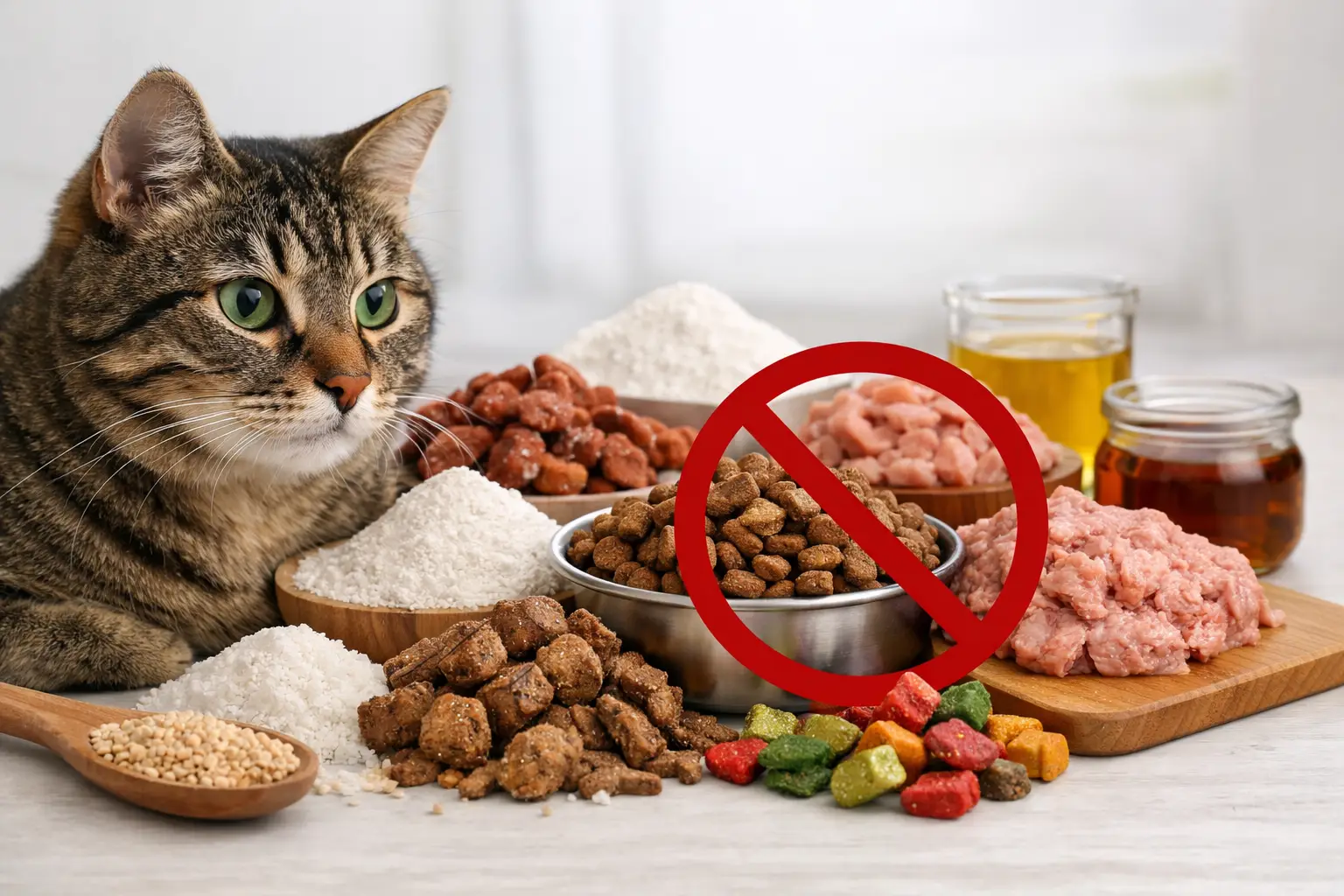
That shiny coat, steady energy, and healthy litter box habits often start with one simple habit – reading the label before you pour the bowl. If you have ever scanned a bag and wondered which ingredients to avoid in cat food, you are asking exactly the right question. Cats thrive on complete, balanced nutrition, but not every formula is built with the same level of care, clarity, or ingredient quality.
The tricky part is that a pet food label can look reassuring even when the recipe includes fillers, vague animal ingredients, or additives that do little for your cat’s long-term wellness. A better label does not have to be complicated. In most cases, you are looking for real protein sources, purposeful fats, digestible carbohydrates when included, and ingredients that support skin, coat, digestion, and everyday vitality.
Why ingredients matter so much for cats
Cats are obligate carnivores, which means their bodies are designed to get key nutrients from animal-based ingredients. They need protein-rich diets and specific nutrients such as taurine to support heart health, vision, and overall function. Because of that, low-value fillers and heavily processed additives can be more than just unnecessary – they can crowd out ingredients that better match a cat’s nutritional needs.
That does not mean every ingredient with a scientific name is bad, or that every grain-free or limited ingredient food is automatically better. Context matters. Some ingredients are included for safety, texture, or nutritional balance. The real goal is to identify ingredients that are overly vague, low in nutritional value, or more likely to create problems for sensitive cats.
Ingredients to avoid in cat food labels
1. Generic meat by-products or unnamed animal meals
Animal ingredients are not automatically a problem. In fact, some organ meats are highly nutritious for cats. The issue is vagueness. Labels like “meat by-products,” “animal digest,” or “poultry meal” without identifying the species can make it harder to know what your cat is actually eating.
Named ingredients such as chicken meal, salmon meal, or turkey liver offer more transparency. If your cat has a food sensitivity, species-specific labeling matters even more. It gives you a clearer picture of protein sources and makes it easier to avoid triggers.
2. Artificial colors
Cats do not care whether their kibble is red, green, or orange. Artificial colors are added for human appeal, not feline nutrition. Ingredients such as Red 40, Yellow 5, Yellow 6, and Blue 2 do not improve the food’s health value.
For pet parents focused on clean, natural nutrition, artificial colors are often an easy ingredient to skip. When a brand puts energy into functional ingredients instead of visual gimmicks, that is usually a better sign.
3. Artificial preservatives like BHA, BHT, and ethoxyquin
Preservatives help maintain shelf life, so this is not a category to fear across the board. The concern is with certain synthetic preservatives that many premium pet owners prefer to avoid. BHA, BHT, and ethoxyquin have raised questions over the years, and while regulations allow specific uses, many shoppers feel more confident choosing foods preserved with mixed tocopherols or other alternatives.
This is one of those areas where your comfort level matters. If ingredient transparency is a priority for you, naturally preserved food may feel like the better fit.
4. Excessive corn, wheat, or soy fillers
Corn, wheat, and soy are not universally harmful, and some cats tolerate them just fine. The problem is quantity, quality, and purpose. When these ingredients appear to serve as inexpensive bulk rather than thoughtful nutrition, they can lower the overall value of the formula.
For cats with food sensitivities, digestive upset, or itchy skin, these ingredients can also be worth a closer look. They are not always the cause, but they are common enough in lower-quality formulas that many pet parents choose recipes built around more clearly beneficial ingredients.
5. Added sugars and sweeteners
Cats have no nutritional need for added sugar. Ingredients like cane molasses, corn syrup, and other sweeteners may be used to increase palatability, but they do not support a healthier diet.
A good cat food should not need sugar to make it appealing. Animal-based proteins and quality fats usually do that job naturally.
6. Carrageenan in some wet foods
Carrageenan is used as a thickener in many canned and pouch-style pet foods. It is one of the more debated ingredients in pet nutrition. Some pet owners avoid it because of concerns around digestive irritation, especially in sensitive cats.
Not every cat reacts poorly to it, and its presence does not automatically make a food poor quality. Still, if your cat has a sensitive stomach or chronic digestive issues, choosing a carrageenan-free wet food may be a smart move.
7. Propylene glycol
This ingredient is a definite one to avoid in cat food. Propylene glycol is not permitted in cat food because it can be harmful to cats. It has been associated with changes in red blood cells, which is why it is a red-flag ingredient for feline diets.
If you ever spot it on a cat food label, put the product back.
8. Excessive plant protein boosters
Ingredients such as pea protein, potato protein, corn gluten meal, and soy protein isolate can raise the total protein number on the label, but they are not the same as animal-based protein in terms of biological value for cats. That distinction matters.
A formula can look protein-rich while still relying too heavily on plant sources. This is where reading beyond the guaranteed analysis helps. You want to see meaningful animal proteins doing the heavy lifting.
9. Rendered fat with unclear sourcing
Fat is essential for taste, energy, and skin and coat health. But labels like “animal fat” without naming the source offer less transparency than ingredients such as chicken fat or salmon oil.
Named fats are especially helpful for cats with sensitivities and for pet parents who want a better handle on quality. Clear sourcing often signals a more carefully formulated food.
10. Garlic and large amounts of onion-related ingredients
Onions, garlic, and related alliums are toxic to cats in sufficient amounts. While these ingredients are not common in complete cat food formulas, they may appear in broths, gravies, toppers, or table scraps people think are harmless.
This is a good reminder that ingredient awareness matters beyond kibble and canned food. Treats and add-ons count too.
11. Vague “natural flavor” when the rest of the label is unclear
Natural flavor is not always a problem. Sometimes it simply improves taste. But when it appears alongside multiple vague ingredients, artificial additives, and low-quality fillers, it can be one more sign that the label is telling you very little.
A strong formula usually makes its quality visible through clearly named proteins, fats, and functional ingredients, not by hiding behind generic terms.
How to spot better ingredients in cat food
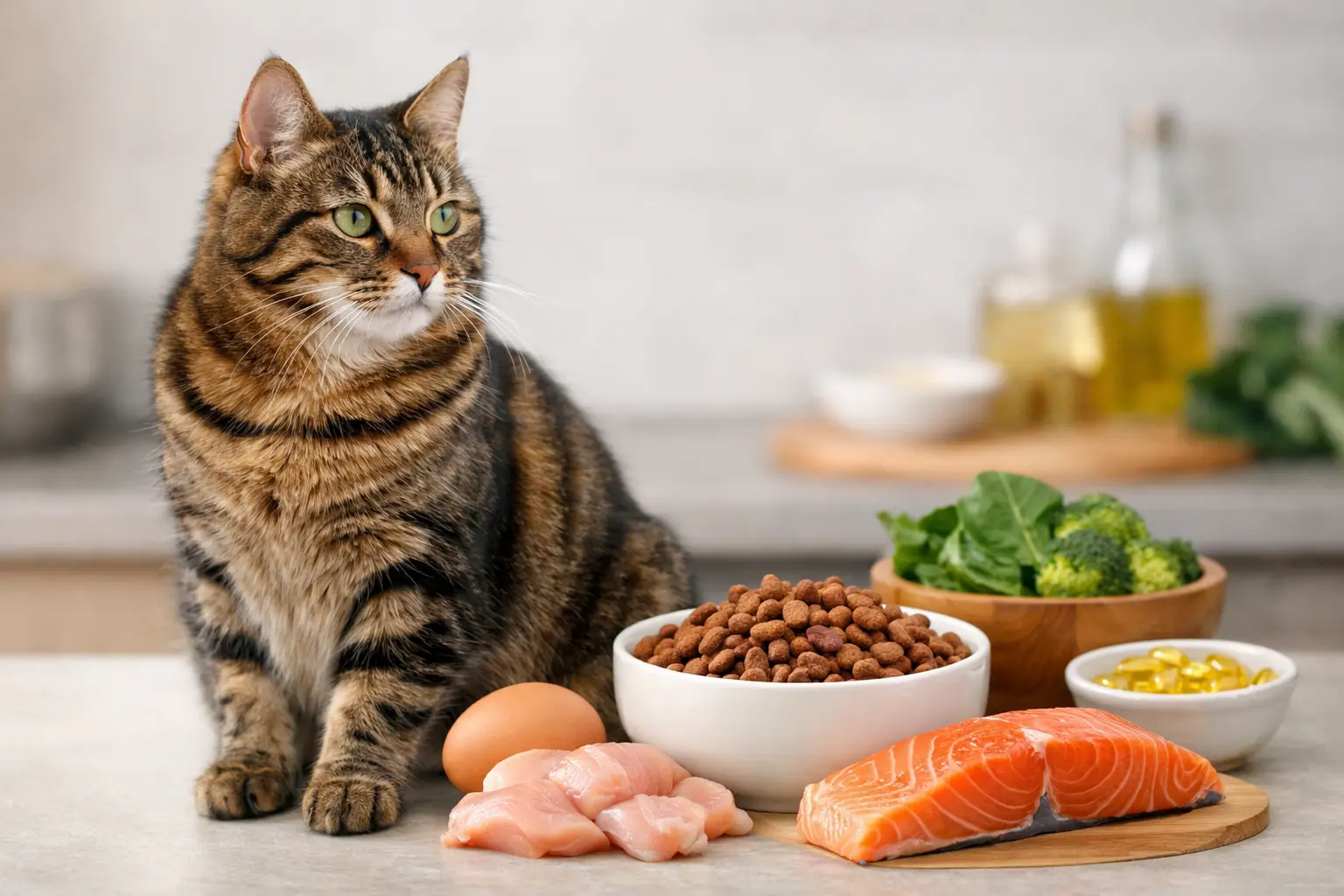
Once you know the ingredients to avoid in cat food, the next step is looking for what deserves a place in the bowl. Start with clearly named animal proteins. Chicken, salmon, tuna, turkey, and other identified protein sources are easier to trust than broad ingredient categories.
Then look at the supporting cast. Healthy fats, omega-rich ingredients, and nutrient-dense additions can make a meaningful difference in skin health, coat condition, and overall wellness. That is one reason premium pet parents often gravitate toward recipes with purposeful ingredients instead of cheap fillers. At AvoDerm, for example, avocado and avocado oil are used as nutrient-rich ingredients that help support healthy skin and a beautiful coat.
It also helps to assess the whole formula rather than fixating on one ingredient. A small amount of a carbohydrate source in a well-balanced, high-quality recipe is different from a formula built mostly around fillers. A preservative used for freshness is different from a recipe packed with artificial extras. Better nutrition is usually about patterns, not panic.
When “avoid” depends on your cat
Not every ingredient is a universal no. Some cats do well with grains. Others need a more limited ingredient approach. A highly active cat, a senior cat, and a cat with food sensitivities may all do best on different formulas.
That is why your cat’s real-world response matters so much. Watch for clues like stool quality, vomiting frequency, itchiness, ear debris, dull coat, or changes in appetite. These signs do not always point to one ingredient, but they can tell you when it is time to take a closer look at the label.
If your cat has ongoing digestive issues, skin problems, or suspected food sensitivities, your veterinarian can help you narrow down likely triggers. Sometimes the answer is avoiding one specific protein. Other times it is moving away from artificial additives or low-quality filler-heavy diets.
A smarter way to read the label
You do not need to memorize every ingredient ever used in pet food. A simpler approach works well. Ask whether the protein sources are named, whether the fats are clearly identified, whether the formula includes purposeful nutrition, and whether the label relies on vague or unnecessary extras.
When a cat food is built around transparency and function, it tends to show. You can see it in the ingredient panel, and often in your cat as well – better digestion, more comfortable skin, and the kind of healthy coat that tells you good nutrition is doing its job.
The best label is not the one with the most marketing language. It is the one that gives you enough clarity to feed your cat with confidence every single day.