A dull coat can be one of the first things pet parents notice, especially when a dog who once looked glossy starts to feel dry, flaky, or rough. The right dog coat nutrition tips can help you look beyond grooming and support healthy skin and a beautiful coat from the inside out.
A dog’s coat is always growing, shedding, and renewing itself. That takes a steady supply of quality nutrients, along with enough water and an eating plan that agrees with their individual system. A premium food cannot make every coat concern disappear overnight, but complete and balanced nutrition gives the skin and fur the daily building blocks they need to thrive.
Dog Coat Nutrition Tips That Start With the Bowl
Healthy fur begins with healthy skin. Since skin is the body’s largest organ, it needs more than an occasional supplement or bath to stay in good condition. Your dog’s everyday food should deliver appropriate calories, digestible protein, essential fatty acids, vitamins, and minerals in a form that fits their life stage.
Choose complete and balanced nutrition
The first step is simpler than it sounds: feed a food formulated to be complete and balanced for your dog’s age and needs. Puppies, active adults, seniors, and pregnant or nursing dogs have different nutritional demands. A food designed for one stage may not be the best match for another.
Complete nutrition matters because a shiny coat is not built by one trendy ingredient alone. It comes from nutrients working together. When a diet is heavily supplemented, home-prepared without veterinary guidance, or made up mostly of treats and table scraps, important nutrients can become unbalanced.
Look for a clearly identified animal protein in the ingredient list and a nutritional adequacy statement on the package. If your dog has a history of food sensitivities, your veterinarian can help determine whether a limited-ingredient or carefully selected formula is a better fit.
Prioritize quality protein
Hair is primarily made of protein. If a dog does not get enough high-quality, digestible protein over time, the body may direct available nutrients toward more essential functions before coat growth. The result can be a coat that looks lackluster or sheds more than usual.
This does not mean the highest-protein food is automatically best. A dog’s ideal amount depends on their age, activity level, overall health, and any medical needs. What matters most is a complete formula with protein sources your dog digests well and enjoys eating consistently.
Feed healthy fats, not just extra calories
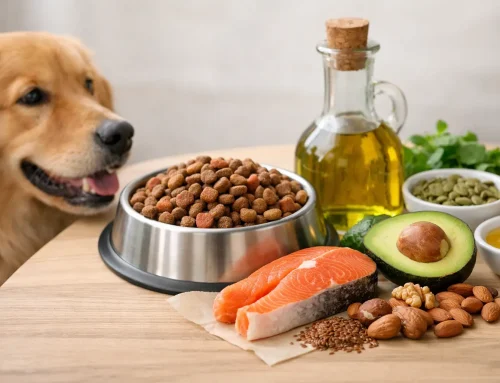
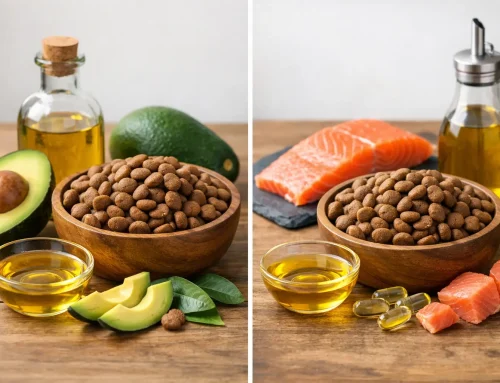
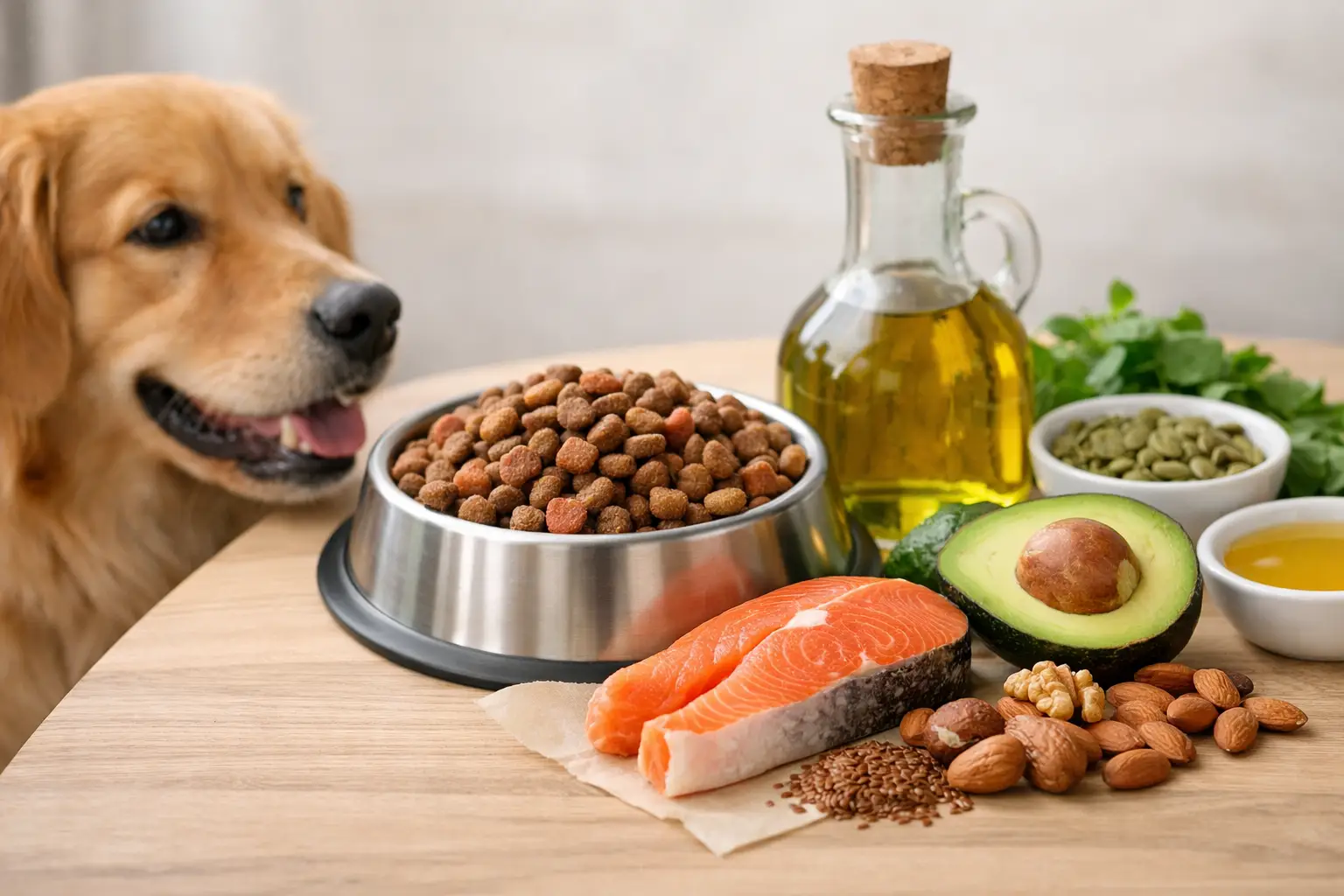
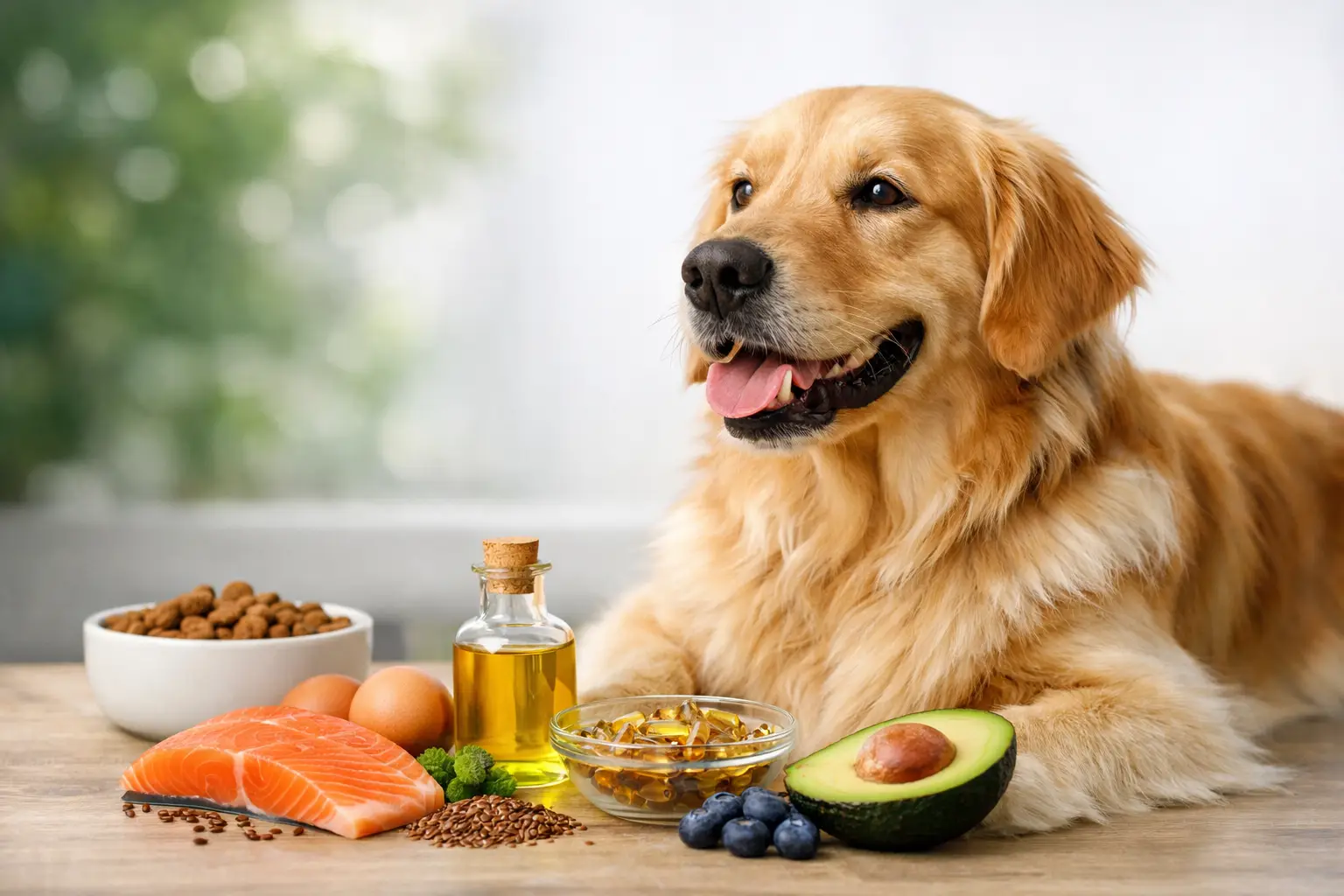
Dietary fats help maintain the skin barrier and support a soft, glossy coat. Essential omega-6 fatty acids, including linoleic acid, are especially important for normal skin and coat condition. Omega-3 fatty acids can also support skin health and help maintain a balanced inflammatory response.
The key is balance. Adding spoonfuls of oil or high-fat treats to a food that is already complete can quickly add calories, upset the stomach, or crowd out balanced nutrition. For dogs that need extra support, ask your veterinarian about whether a targeted supplement makes sense and what dose is appropriate.
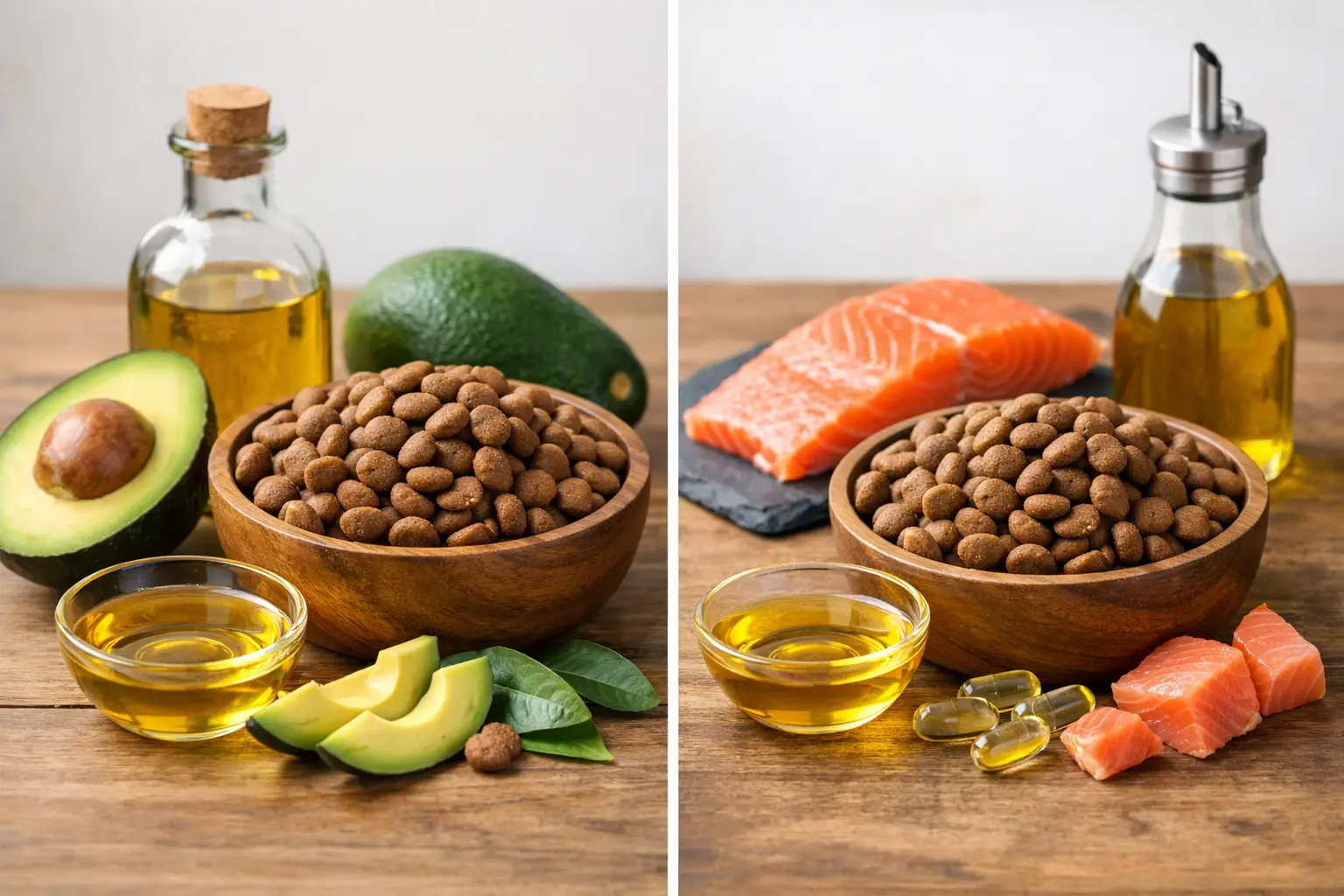
Avocado and avocado oil are valued ingredients because they naturally provide beneficial fats. In thoughtfully formulated dog food, avocado can be part of a nutrient-rich approach to skin and coat support. AvoDerm recipes are built around this signature superfood ingredient while providing complete and balanced everyday nutrition.
Nutrients That Help a Dog’s Coat Look Its Best
A beautiful coat reflects more than fat intake. Several micronutrients help the body use protein and fats effectively while supporting normal skin renewal.
Vitamin E is an antioxidant that helps protect cells from oxidative stress. Zinc supports normal skin function and hair growth, while copper contributes to normal coat pigmentation. B vitamins also play a role in energy metabolism and skin health. These nutrients are carefully balanced in quality commercial dog foods, which is one reason random supplement stacking can be risky.
More is not always better. Excessive zinc, vitamin D, vitamin A, or other nutrients can cause real health problems. Unless your veterinarian has identified a deficiency or specific need, it is usually wiser to focus on a consistent, complete diet than to chase a long list of add-ons.
Hydration Makes a Difference, Too
Skin needs hydration to do its job well. Dogs eating dry food can still be well hydrated, but fresh water should always be available and refreshed often. Some dogs naturally drink less than others, particularly in cooler weather or when their activity level drops.
You can encourage water intake with clean bowls in convenient locations, a pet water fountain, or moisture-rich food options that fit your dog’s diet. If your dog suddenly drinks far more or far less than usual, contact your veterinarian. Changes in thirst can signal more than a coat concern.
When a Food Change May Help
If your dog’s coat has gradually become dry or dull and they are otherwise acting normally, reviewing their food is a practical place to start. Consider whether the current diet is appropriate for their life stage, whether too many treats are replacing balanced meals, and whether recent changes in appetite or digestion have affected nutrient intake.
Switching to a new food should be gradual. Start by mixing a small amount of the new food with the old, then increase the new food over roughly seven to 10 days. Dogs with sensitive stomachs may need a slower transition. Watch stool quality, appetite, energy, and itching as you make the change.
A new formula may be helpful when a dog does not tolerate their current food well, but it is not a quick fix for every skin issue. Fleas, seasonal allergies, environmental irritants, hormonal changes, and underlying health conditions can all affect the coat. Nutrition is powerful support, yet it works best alongside good preventive care and veterinary guidance.
Dog Coat Nutrition Tips Beyond Food
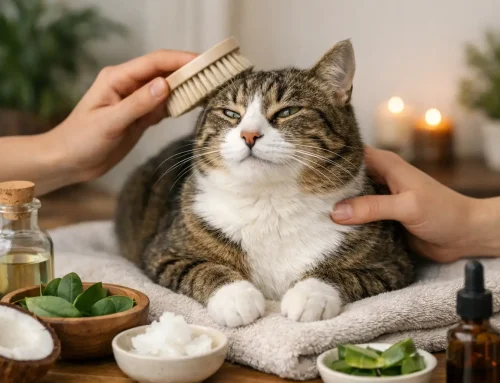
What happens outside the bowl matters as well. Regular brushing removes loose hair and distributes natural skin oils through the coat. The best schedule depends on coat type: a short-haired dog may need a quick weekly brush, while a thick double coat or long hair may require more frequent care to prevent mats.
Avoid bathing too often or using harsh human shampoo, which can strip oils and irritate canine skin. Use a dog-specific shampoo, rinse thoroughly, and follow product directions. If your dog’s skin seems itchy, red, greasy, flaky, or has an unusual odor, resist the urge to keep trying new grooming products. A veterinary visit can identify whether parasites, infection, or allergies are involved.
Maintaining a healthy body weight also supports skin and coat wellness. Extra pounds can make grooming harder and may contribute to inflammation, while underfeeding can leave a dog without the calories and nutrients needed to maintain healthy tissue. Measure meals, account for treats, and adjust portions with your veterinarian when needed.
Know When to Call the Veterinarian
A little shedding is normal, and many dogs shed heavily with seasonal changes. Sudden bald patches, persistent scratching, sores, ear infections, greasy skin, or major changes in coat texture deserve professional attention. A dog who is losing weight, vomiting, having diarrhea, or acting tired should also be seen promptly.
Bring details to the appointment: the food and treats your dog eats, when symptoms started, recent grooming products, parasite prevention, and any changes at home. That fuller picture helps your veterinarian separate a nutrition question from a medical one.
Your dog’s softest, brightest coat is rarely the result of a single miracle ingredient. It grows from consistent meals, healthy fats, fresh water, thoughtful grooming, and attention when something changes. Feed with purpose, give the routine time to work, and let those everyday choices show in every happy tail wag.