
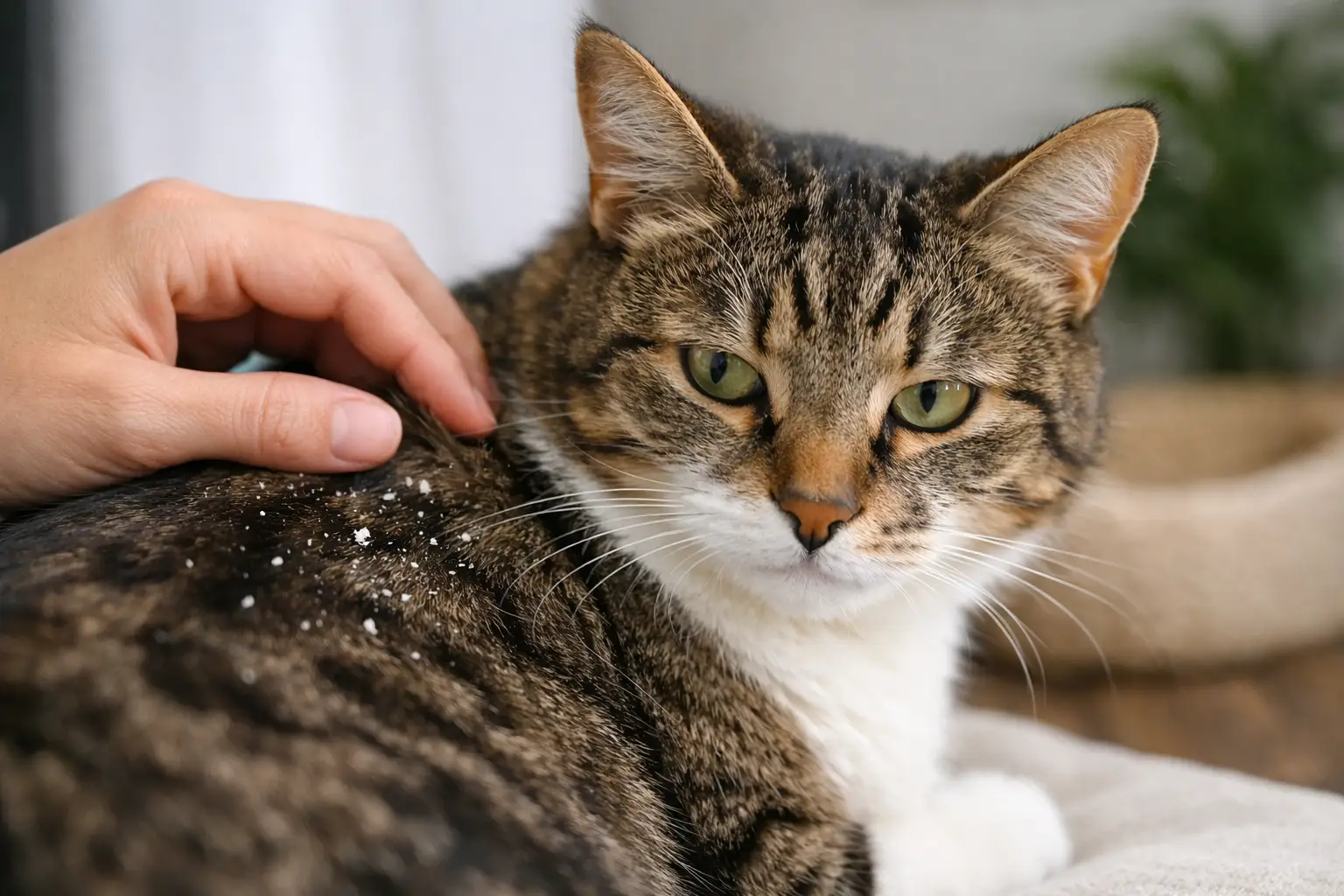
Those white flakes on your cat’s dark fur can be startling, especially when the rest of their coat usually looks glossy and soft. If you are asking, why does my cat have dandruff, the short answer is that dry, shedding skin is often involved – but the reason behind it can range from a simple grooming issue to a condition that deserves veterinary care.
A little flaking may improve with better brushing, hydration, or a more nutrient-rich routine. Persistent dandruff, itching, hair loss, redness, or changes in behavior are different. Those clues can help you and your veterinarian get to the root of the problem and help your cat feel comfortable in their skin again.
Why does my cat have dandruff?
Dandruff is made up of dead skin cells that shed more visibly than usual. Cats naturally replace skin cells all the time, but healthy skin and regular grooming usually keep those cells from collecting on the coat. When the skin is dry, irritated, oily, inflamed, or hard for your cat to reach, flakes can become obvious.
The pattern matters. Fine, dry flakes across the back may point to dry skin or poor self-grooming. Greasy flakes, a sour smell, scabs, or redness may suggest a skin condition. Flakes concentrated near the base of the tail can sometimes be associated with fleas or flea allergy dermatitis, even if you have not spotted a flea.
Dandruff is not a diagnosis by itself. It is a visible sign that your cat’s skin barrier, grooming habits, environment, nutrition, or overall health may need attention.
Common reasons cats develop flaky skin
Dry indoor air and seasonal changes
Heated homes can make winter air very dry, while air conditioning can have a similar effect in warmer months. Some cats develop mild seasonal flakes when their skin loses moisture more quickly. A humidifier may help, particularly in the room where your cat sleeps most often.
Avoid bathing a cat simply because you see dandruff. Most cats do not need routine baths, and frequent bathing or human shampoo can strip the skin of its natural oils. If a bath is necessary because of a mess or a medical recommendation, use a veterinarian-approved cat shampoo.
Missed grooming, especially along the back
Cats are excellent groomers, but age, arthritis, weight gain, dental pain, and illness can make grooming difficult. A cat who cannot comfortably bend and reach the lower back may develop visible flakes there. Long-haired cats may also need extra brushing to remove loose fur, skin cells, and small tangles before they become mats.
Gentle brushing does more than make the coat look tidy. It distributes natural oils, removes loose material, and gives you a chance to notice changes such as lumps, scabs, fleas, or sensitive areas. Start slowly with a brush your cat tolerates and keep sessions short enough to remain positive.
Fleas, mites, and other skin irritants
A single flea bite can cause intense itchiness in a flea-sensitive cat. Look for scratching, chewing, tiny dark specks called flea dirt, or irritated skin around the lower back and tail base. Other parasites, including mites, can also cause flakes and discomfort, but they require a veterinarian to diagnose and treat properly.
Skin irritation can also come from contact with a new detergent, fragrance, cleaning product, bedding material, or topical product. If the timing lines up with a new household item, stop using it around your cat and ask your veterinarian what to do next. Do not apply essential oils or over-the-counter human skin treatments to your cat. Cats are especially sensitive to many substances that seem harmless in a human home.
Nutrition and hydration
Skin relies on consistent nutrition to renew itself and maintain a protective barrier. A complete and balanced cat food provides the protein, essential fatty acids, vitamins, and minerals that support healthy skin and a beautiful coat. Cats also have naturally low thirst drives, so moisture intake matters.
A diet that is not nutritionally complete, an abrupt food change, or a food that does not agree with your cat can sometimes show up in the skin and coat. That does not mean every flaky cat needs a new food. Switching foods repeatedly can upset digestion and make it harder to identify what is helping. Instead, discuss persistent concerns with your veterinarian and make dietary transitions gradually.
For cats who benefit from skin and coat-focused nutrition, look for a complete and balanced formula made for their life stage. AvoDerm cat foods pair quality nutrition with avocado and avocado oil, ingredients valued for beneficial fatty acids that help support skin and coat health. As with any food transition, introduce a new formula over several days while monitoring appetite, stool quality, and comfort.
Allergies, infections, and underlying health conditions
Food sensitivities and environmental allergies can contribute to itchy, inflamed skin, but dandruff alone does not confirm an allergy. Allergic cats often have additional signs, including frequent scratching, overgrooming, recurring ear problems, or sores around the head and neck. Your veterinarian may recommend a structured diet trial or other testing rather than guessing based on ingredients.
Bacterial or yeast infections can create flakes along with odor, oily skin, redness, or crusting. Hormonal disorders and chronic conditions can also affect coat quality. In older cats, dandruff paired with poor grooming, weight loss, increased thirst, appetite changes, or a dull coat is a good reason to schedule an exam sooner rather than later.
How to help a cat with mild dandruff at home
If your cat is acting normally and the flaking is mild, focus on supportive daily care. Keep fresh water available in more than one location and consider adding veterinarian-approved wet food if your cat needs more dietary moisture. Clean water bowls daily, since many cats are particular about freshness.
Brush your cat regularly, using a soft brush or grooming tool suited to their coat length. For a short-haired cat, a few gentle minutes once or twice a week may be enough. Long-haired cats may need more frequent care. Never pull through a mat or brush over irritated skin.
Check that your cat is keeping up with grooming. If they seem stiff, reluctant to jump, or uncomfortable when you touch their back or hips, dandruff may be one small sign that mobility is becoming a challenge. Helping with grooming is kind, but identifying the source of discomfort matters more.
Keep parasite prevention current based on your veterinarian’s guidance, even for indoor cats. Fleas can enter on people, other pets, or household items, and preventing an infestation is far easier than treating one.
When dandruff means it is time to call the veterinarian
Make a veterinary appointment if flakes last more than a couple of weeks despite gentle home care, or if they keep coming back. Call sooner if your cat has significant itching, bald patches, scabs, bleeding, oily or foul-smelling skin, visible fleas, or discomfort when touched.
You should also seek prompt advice if dandruff appears alongside changes in appetite, weight, thirst, litter box habits, energy, or grooming behavior. Cats are skilled at hiding discomfort. A coat change may be one of the first signs you notice.
Your veterinarian can examine the skin and coat, look for parasites, assess body condition and mobility, and determine whether bloodwork, skin testing, or a targeted treatment is appropriate. Bring notes about when the flakes started, any recent diet or household changes, and the products you use around your cat. Clear details can make the appointment more productive.
Support skin health before flakes take over
The goal is not a perfectly spotless brush after every grooming session. It is a cat who is comfortable, well nourished, hydrated, and able to care for their coat normally. With regular grooming, thoughtful nutrition, and quick attention to changes, you can help keep your cat’s skin healthy and their coat looking like good health shows.