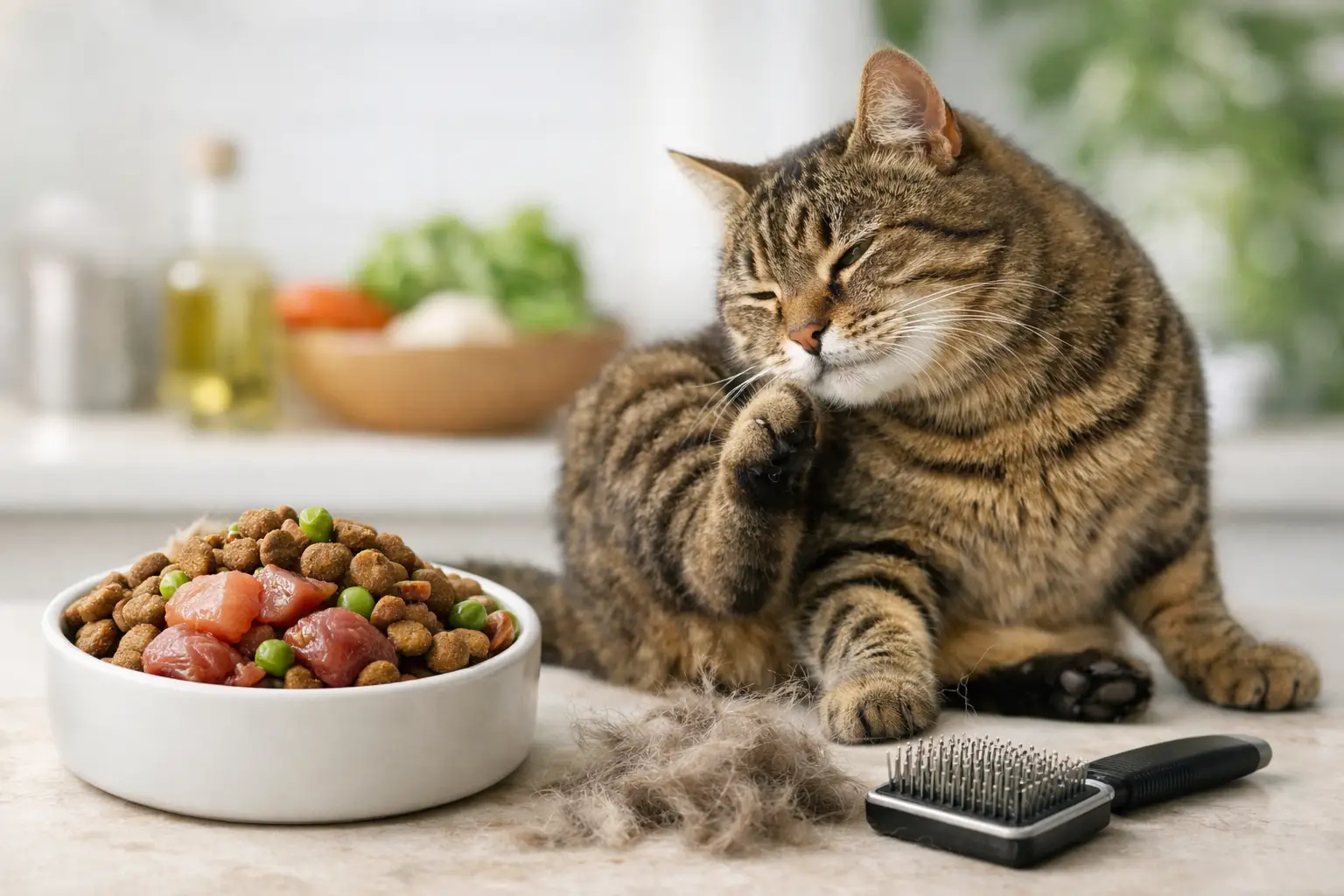
A brush full of fur can make even the most devoted cat parent wonder whether something is wrong. Some shedding is completely normal, especially when seasons change, but a dull coat, flaky skin, or suddenly heavy hair loss deserves a closer look at your cat’s daily routine. Understanding how natural cat food helps shedding starts with a simple idea: the coat your cat wears every day is built from the nutrition in their bowl.
A natural, complete, and balanced cat food cannot make shedding disappear. Cats shed to replace old hair, respond to seasonal light changes, and maintain a healthy coat. What thoughtful nutrition can do is support the skin barrier, hair growth, and coat strength so your cat is more likely to shed normally rather than lose brittle, damaged hair.
How Natural Cat Food Helps Shedding From Within
Hair is largely protein, and healthy skin depends on a steady supply of nutrients. When a cat’s diet is missing key building blocks or does not agree with their system, the coat may be one of the first places pet parents notice a change. Excess fur around the house may come with dryness, dandruff, itching, greasy patches, or hair that feels rough instead of soft.
Natural cat food often emphasizes recognizable ingredients and purposeful nutrition, but the word “natural” alone is not a guarantee of quality. For cats, the most useful question is whether the food is complete and balanced for their life stage and provides the protein, fats, vitamins, and minerals that support whole-body health. A food should not simply sound wholesome. It needs to meet a cat’s very specific nutritional needs every day.
Protein helps maintain the coat
Because cats are obligate carnivores, they rely on animal-based ingredients and amino acids to thrive. Dietary protein supports the continual process of replacing hair and maintaining skin tissue. A formula with appropriate animal protein and essential amino acids, including taurine, gives your cat the materials needed to maintain a full, resilient coat.
Protein needs vary by life stage, activity level, body condition, and health status. A kitten, for example, has different needs than a sedentary adult cat or a senior with a medical condition. This is why a complete cat food is a better long-term solution than trying to improve the coat with a topper alone.
Healthy fats support soft skin and a glossy coat
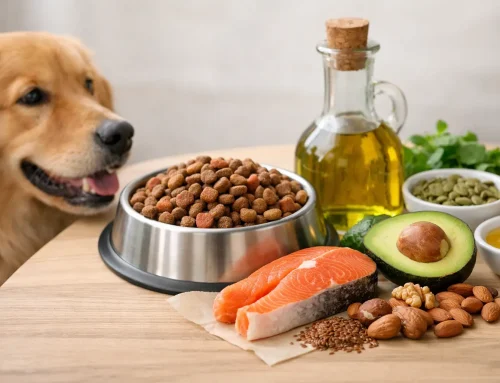
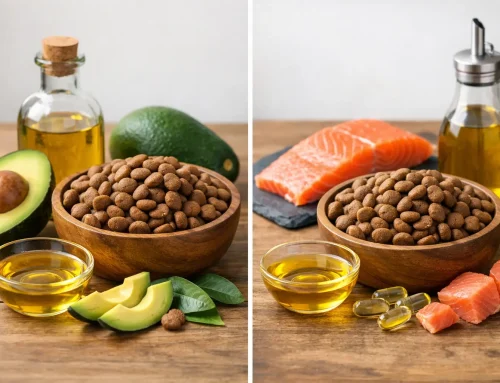
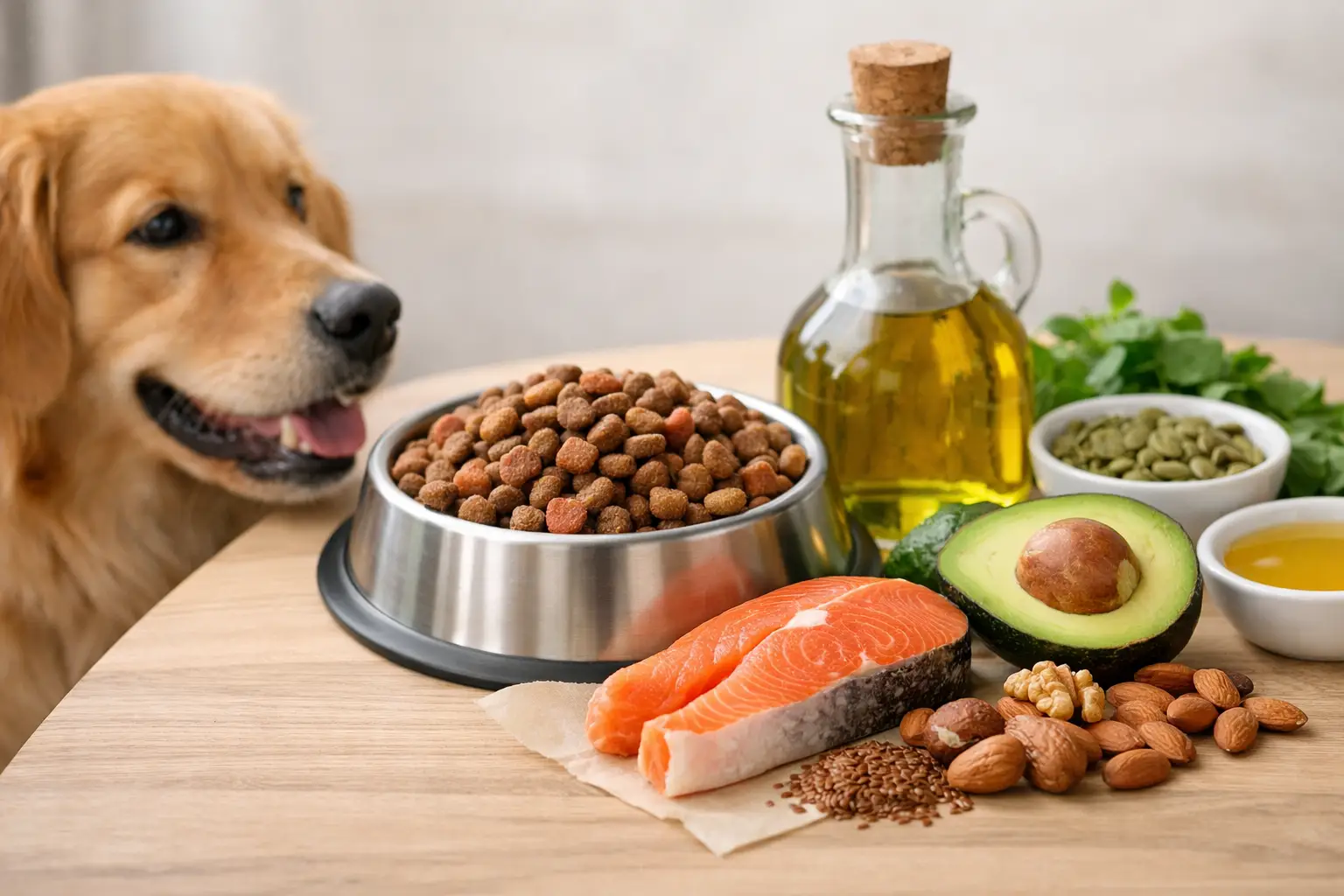
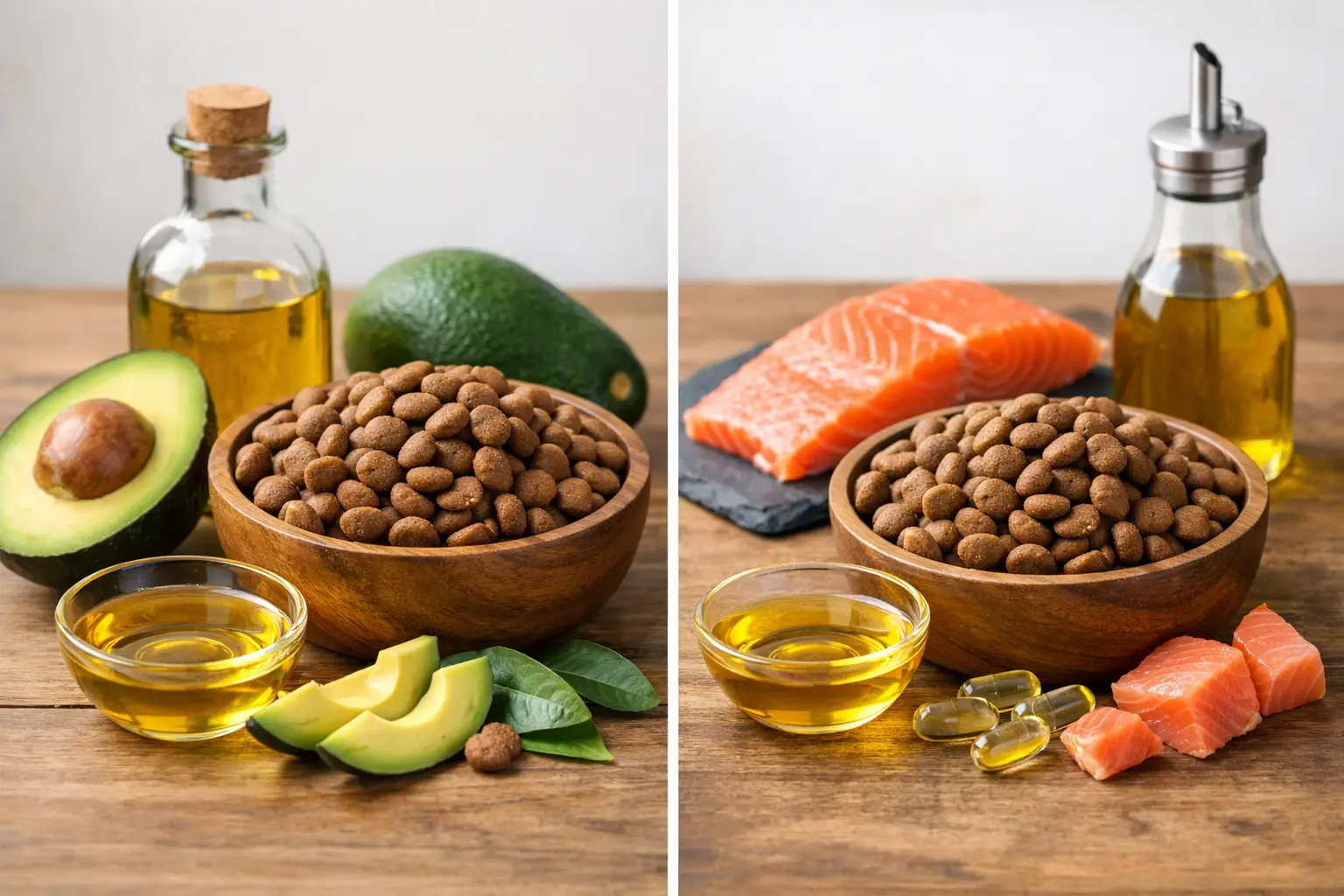
Omega fatty acids are especially valuable for skin and coat care. Omega-3 and omega-6 fatty acids support skin hydration and help maintain the natural oils that keep fur smooth and flexible. When the skin is well nourished, hair is less likely to become dry and break easily.
The balance matters as much as the presence of fat. Too little dietary fat may leave the coat looking lackluster, while too many calories can contribute to unwanted weight gain. A well-formulated food supplies beneficial fats in amounts designed for everyday feeding, rather than asking you to guess how much oil or supplementation your cat needs.
Avocado and avocado oil can be part of that nutrient-focused approach when included appropriately in pet food. They provide naturally occurring fatty acids and nutrients that support healthy skin and a beautiful coat. AvoDerm builds its cat nutrition around avocado and avocado oil as signature ingredients, paired with complete and balanced recipes designed for daily feeding.
Vitamins and minerals keep the skin barrier working
Your cat’s skin is more than a surface. It is a protective barrier that helps hold moisture in and keeps outside irritants out. Nutrients such as vitamin E, zinc, and certain B vitamins play supporting roles in normal skin and coat function. When the skin barrier is comfortable and supported, cats may be less likely to overgroom or scratch, behaviors that can make hair loss look worse.
A high-quality food brings these nutrients together in a dependable daily format. That matters because coat changes often develop gradually. Consistent nutrition gives the body time to grow new hair through a normal coat cycle.
Natural Ingredients Can Be Helpful, but “Natural” Is Not the Whole Answer
Pet parents often choose natural cat food because they want fewer unnecessary extras and more confidence in what they are serving. That is a reasonable goal, but a natural label should be the beginning of the conversation, not the finish line.
Look for a statement showing the food is complete and balanced for your cat’s life stage. Check that animal protein is a meaningful part of the recipe, and consider whether the formula includes sources of beneficial fatty acids. If your cat has had digestive upset, itchiness, or recurring coat concerns after certain foods, a simpler recipe or a formula tailored to food sensitivities may also be worth discussing with your veterinarian.
It depends on the individual cat. Some cats do beautifully on a broad range of quality formulas, while others need more careful ingredient selection. A food that helps one cat’s coat shine may not be the right fit for a cat with a specific allergy, chronic digestive issue, or underlying medical condition.
What to Expect After Changing Your Cat’s Food
A better coat is not an overnight result. Existing hair still needs to complete its natural cycle before you see the benefit of improved nutrition in new growth. Many pet parents notice changes such as softer fur, less visible flaking, or a healthier-looking sheen over several weeks, though the timeline varies.
Make any food change slowly. Start by mixing a small amount of the new food with your cat’s current food, then gradually increase the new food over about seven to 10 days. A slower transition can be useful for cats with sensitive stomachs. Watch the litter box, appetite, energy, and skin as well as the coat. A formula is only a good match if your cat enjoys it and tolerates it well.
Avoid adding multiple new supplements, treats, and foods at the same time. If your cat develops vomiting, diarrhea, itching, or a worsening coat, it is much easier to identify a possible trigger when changes are made one at a time.
Food Is One Part of a Lower-Shed Home
Nutrition supports the coat from the inside, while simple care helps manage the hair that is naturally shed. Regular brushing removes loose fur before it lands on furniture and can reduce the amount of hair your cat swallows during grooming. Short-haired cats may need only a quick session once or twice a week, while long-haired cats often benefit from more frequent grooming.
Fresh water also matters. Cats are not always enthusiastic drinkers, and hydration supports overall wellness. Wet food can be a helpful part of the routine for many cats because it contributes moisture while delivering complete nutrition. Your veterinarian can help you decide whether dry food, wet food, or a combination is best for your cat.
Keep your cat’s environment comfortable, too. Parasites, dry indoor air, stress, and inadequate grooming can all affect skin and coat condition. A balanced food is a powerful foundation, but it works best alongside routine preventive care and a calm, enriching home.
When Heavy Shedding Needs Veterinary Attention
Call your veterinarian if shedding comes with bald spots, red or irritated skin, scabs, persistent scratching, excessive licking, a sudden change in appetite, weight loss, or changes in energy. These signs can point to issues that food alone will not solve, including fleas, skin infections, allergies, pain, hormonal conditions, or other health concerns.
Even without obvious skin symptoms, a dramatic change in your cat’s shedding pattern is worth mentioning. Your veterinarian can evaluate the full picture and help determine whether a dietary adjustment, parasite prevention, testing, or another treatment is appropriate.
A little fur on the sofa is part of sharing life with a cat. But when that fur is paired with a coat that looks soft, feels smooth, and grows from comfortable skin, it is a visible reminder that good health really does show.