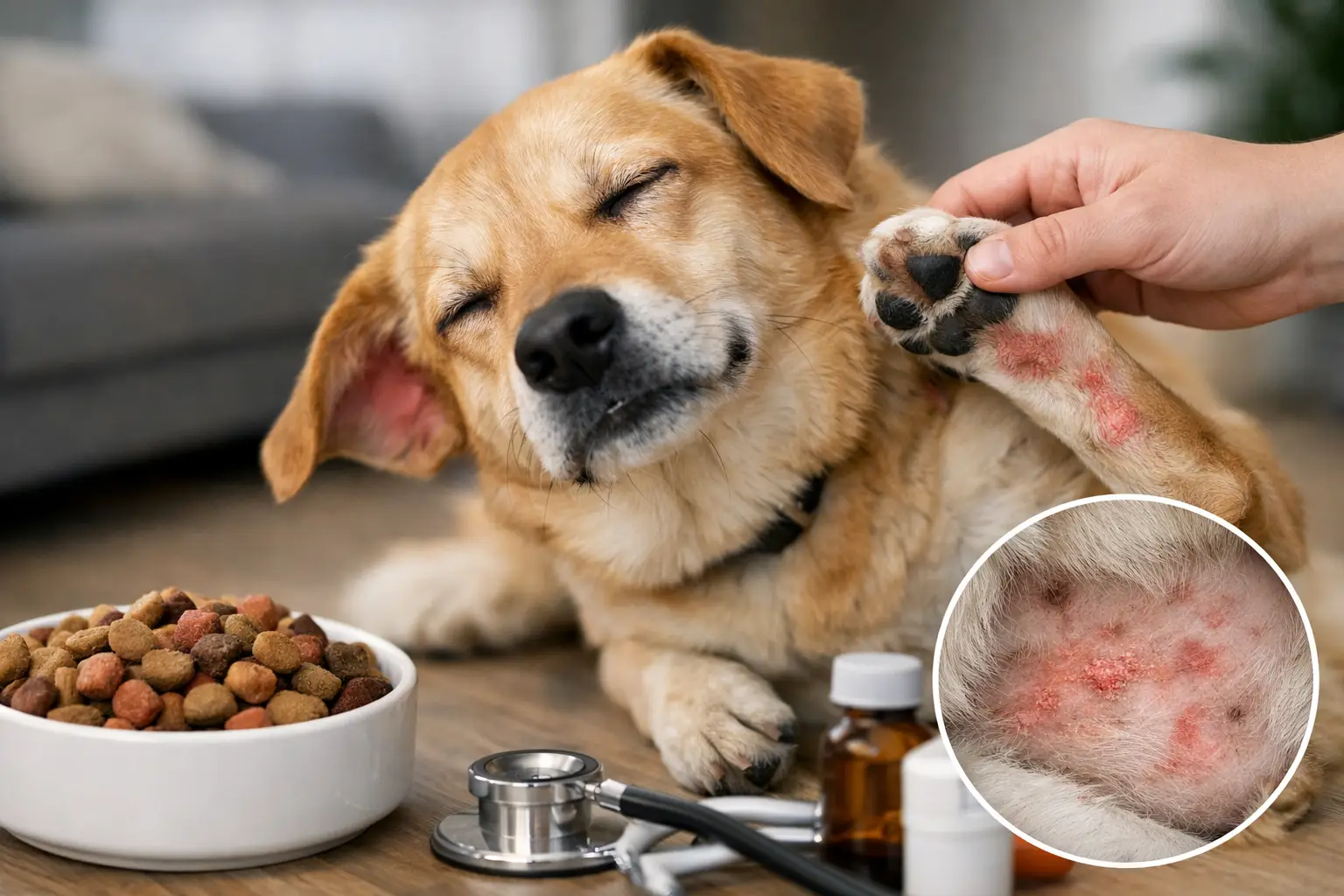
If your dog is scratching through the night, licking their paws raw, or dealing with one ear infection after another, a dog food allergy symptoms example can help you connect the dots faster. Many pet parents assume the problem starts on the skin, but food reactions often show up in ways that seem unrelated at first – from itchy ears to soft stool to constant chewing at the feet.
That is what makes food allergies so frustrating. The signs can look like seasonal allergies, a sensitive stomach, or even stress habits. Knowing what a typical reaction looks like gives you a better starting point, especially if your dog has ongoing symptoms that never fully clear up.
A dog food allergy symptoms example in real life
Picture a healthy adult dog who has been eating the same food for months. Over time, they start licking their paws every day. Then their ears become red and waxy. You may also notice loose stool that comes and goes, plus more scratching around the face, belly, and rear end.
That is a classic dog food allergy symptoms example because it combines two of the most common patterns – skin irritation and digestive upset. Not every dog will have both, but many do. The reaction can build gradually, which is one reason food allergies are easy to miss.
Another example might be a dog with chronic itching but no fleas, no obvious rash from the yard, and no clear seasonal pattern. If that dog also has recurring gas, vomiting, or anal gland issues, food becomes a stronger suspect.
What food allergy symptoms usually look like
Food allergies in dogs most often affect the skin and digestive tract. Skin signs tend to get the most attention because they are visible and uncomfortable. Dogs may scratch their ears, rub their face on the carpet, bite at their paws, or develop hot spots from repeated irritation.
You might also see redness under the legs, on the belly, or around the groin. Some dogs lose patches of hair from constant chewing. Others develop a dull coat because irritated skin and poor comfort can affect overall appearance. Good health shows in the skin and coat, so persistent flare-ups are worth taking seriously.
Digestive signs can be subtler. Soft stool, diarrhea, extra bowel movements, gas, nausea, and occasional vomiting may all play a role. Some dogs seem hungry but uncomfortable after meals. Others have symptoms that come and go, which can make the issue feel random when it really is tied to diet.
Ear infections are another major clue. If your dog keeps getting inflamed, itchy ears without a clear environmental trigger, food may be part of the picture. Chronic ear trouble is one of the most overlooked signs of a dietary reaction.
Food allergy or food sensitivity?
Pet owners often use these terms interchangeably, and in everyday conversation that is understandable. Still, there is a difference. A true food allergy involves the immune system reacting to a specific ingredient, usually a protein source. A food sensitivity or intolerance does not follow the same immune pathway, but it can still cause very real symptoms.
From your perspective at home, the signs may look similar. Your dog may itch, have digestive trouble, or seem better on one food and worse on another. That is why many veterinarians focus first on identifying the trigger and helping the dog feel better, rather than getting too caught up in the label.
Common ingredients that may trigger a reaction
Dogs can react to a range of ingredients, but proteins are frequent culprits. Beef, chicken, dairy, and eggs are commonly discussed, though any ingredient has the potential to become a problem for an individual dog. Some dogs also react to grains or other components of a formula, but protein sources tend to get the most attention for good reason.
The tricky part is exposure over time. A dog usually does not react to a new ingredient on the very first bite. Reactions often develop after repeated contact, which is why a food your dog seemed fine on for months can still become part of the problem.
This is also where ingredient quality and thoughtful formulation matter. For dogs with sensitivities, a simpler recipe with carefully selected ingredients can make daily feeding feel much more manageable.
Why these symptoms are easy to confuse with other problems
A dog with food allergies may look a lot like a dog with environmental allergies. Both may scratch, lick, and develop skin irritation. Fleas can cause similar misery. Yeast infections, bacterial skin infections, and parasites can complicate the picture too.
That is why diagnosis takes patience. If your dog has itchy skin in spring but is perfectly comfortable in winter, pollen may be the bigger factor. If the symptoms continue year-round, food becomes more likely, though environmental allergens can still be involved. Sometimes it is not one thing. Some dogs have both food sensitivities and seasonal triggers.
What to do if you suspect a food allergy
Start by paying attention to patterns. Write down when the itching started, what food your dog is eating, what treats they get, and whether digestive signs happen around the same time. This simple step can be surprisingly helpful when symptoms feel scattered.
Next, talk with your veterinarian. Ongoing itching, repeated ear infections, or chronic digestive upset deserve a professional look. Your vet can help rule out fleas, infections, and other common causes before focusing on food.
If food is suspected, your vet may recommend an elimination diet. This is the most useful way to identify whether your dog is reacting to something in their current food. During this period, consistency matters. Even a small amount of the old food, flavored medications, table scraps, or treats can blur the results.
How an elimination diet works
An elimination diet usually involves feeding a limited recipe your dog has not eaten before, or a specialized veterinary diet, for several weeks. The goal is to remove likely triggers and watch for improvement. This takes time because irritated skin and digestive systems do not reset overnight.
If your dog improves during the trial and symptoms return when old ingredients are reintroduced, that points strongly toward a food-related issue. It sounds simple, but real life can make it challenging. Multi-pet homes, shared treats, and well-meaning family members can all interfere with the process.
Still, this approach gives you clearer answers than guessing or switching foods every few days. Random changes can actually make it harder to tell what is helping.
Choosing a better daily food for sensitive dogs
Once you and your veterinarian have identified likely triggers, the next step is finding a complete and balanced food your dog can do well on every day. For many pet parents, this means looking for formulas made with high-quality ingredients, straightforward protein choices, and nutrition that supports skin and coat health along with digestion.
That support matters because dogs dealing with food sensitivities often need more than just avoidance. They benefit from diets that help maintain the skin barrier and promote overall wellness. Ingredients rich in healthy fats can be especially helpful for keeping skin nourished and coats looking their best. That is one reason some pet owners look to formulas like AvoDerm, where avocado and avocado oil are included for their naturally beneficial fats and skin-supportive nutrition.
The right food is not always the trendiest one. Grain-free is not automatically better, and exotic proteins are not necessary for every dog. It depends on your dog, their history, and what ingredients they truly tolerate well.
Signs your dog may be improving
As the trigger ingredient leaves your dog’s routine, you may notice less paw licking, calmer skin, fewer digestive flare-ups, and better ear comfort. Some dogs become more relaxed overall simply because they are not constantly irritated.
Coat quality may improve too, although that can take longer. Healthy skin and a beautiful coat usually reflect what is happening inside the body over time. Gradual change is normal, and slow progress can still be meaningful progress.
When to act quickly
While most food-related symptoms are chronic rather than dramatic, some reactions need prompt veterinary attention. Severe vomiting, significant diarrhea, swelling, trouble breathing, or sudden collapse should never be managed as a simple food issue at home.
Even less urgent cases should not drag on for months without a plan. Repeated itching and inflammation can lead to secondary infections, discomfort, and a lower quality of life. Dogs do not just “get used to it.” They cope with it, and that is different.
If your dog keeps showing the same signs, trust what you are seeing. Small symptoms that repeat are often the body asking for a better answer, and the right food can make everyday comfort a lot easier to see.