A dull coat, dry flakes, or frequent scratching can make every pet parent wonder whether something is missing from the bowl. Omega rich dog food can be a smart place to start, especially when you want nutrition that supports your dog’s skin, coat, and whole-body wellness every day.
Healthy fats do more than make food taste appealing. They help nourish the skin barrier, support normal inflammatory responses, and give your dog’s coat the soft, glossy look that often signals good health. The key is choosing a complete and balanced recipe with thoughtfully selected fat sources, rather than chasing the biggest omega number on a package.
Why omega rich dog food matters
Dogs need dietary fat for energy and for the absorption of fat-soluble vitamins. Within that broader category, omega-3 and omega-6 fatty acids have distinct jobs. Both are essential fatty acids, meaning dogs need to get them through food because their bodies cannot make enough on their own.
Omega-6 fatty acids, including linoleic acid, are especially important for healthy skin and a normal, resilient skin barrier. When that barrier is well supported, skin is better able to hold moisture and keep everyday environmental irritants where they belong – outside.
Omega-3 fatty acids, commonly associated with fish oil and certain plant ingredients, help support skin health and normal immune function. They are also valued for supporting joint comfort, brain function, and overall wellness. EPA and DHA are two long-chain omega-3s often found in marine-based ingredients, while ALA is a plant-based omega-3 that the body can convert only in limited amounts.
That is why omega-rich nutrition is about more than one ingredient. A well-made dog food brings together an appropriate balance of omega fats with quality protein, digestible carbohydrates, vitamins, and minerals. Your dog needs the full meal, not just a splash of oil on top.
Skin and coat benefits you may be able to see
A dog’s skin and coat are often among the first places nutrition becomes visible. A healthy coat may feel softer, look fuller, and have a natural shine. Healthy skin should look comfortable, without persistent dryness, excess flaking, or redness.
Results are not overnight. Hair growth and skin renewal take time, so allow several weeks of consistent feeding before judging a new food. Some dogs show a more polished coat first, while others may show gradual improvements in comfort and less dry-looking skin.
It also depends on the cause of the issue. Seasonal dryness, frequent bathing, parasites, allergies, infection, and underlying medical conditions can all affect the skin and coat. Food can provide meaningful support, but it is not a substitute for veterinary care when your dog has intense itching, hot spots, hair loss, ear irritation, wounds, or sudden changes in behavior.
Where omega fats come from in dog food
Not all omega sources provide the same fatty acids, and that is perfectly fine. Different ingredients can play complementary roles in a complete recipe.
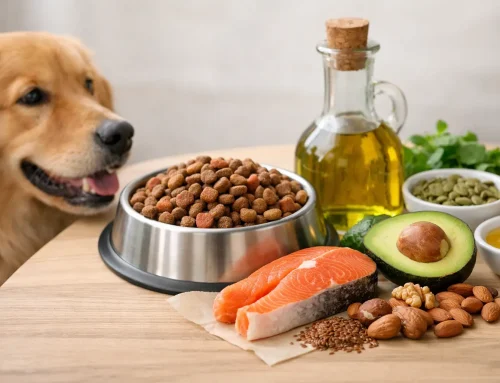
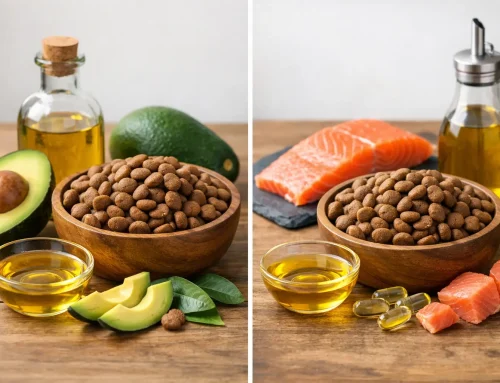
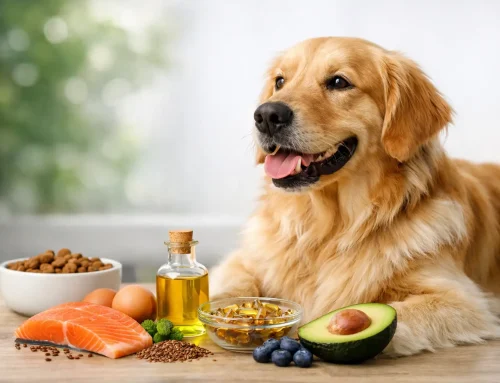
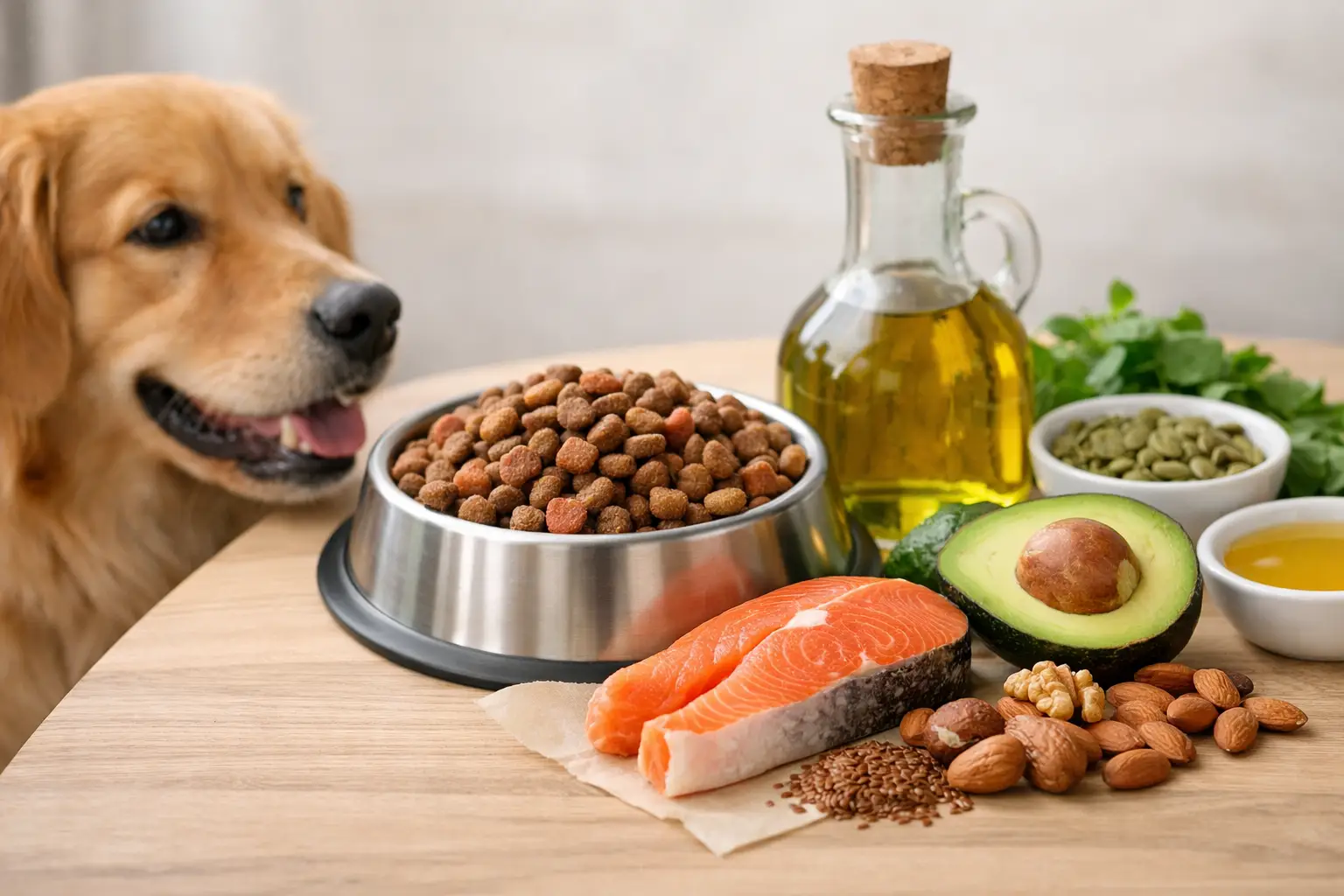
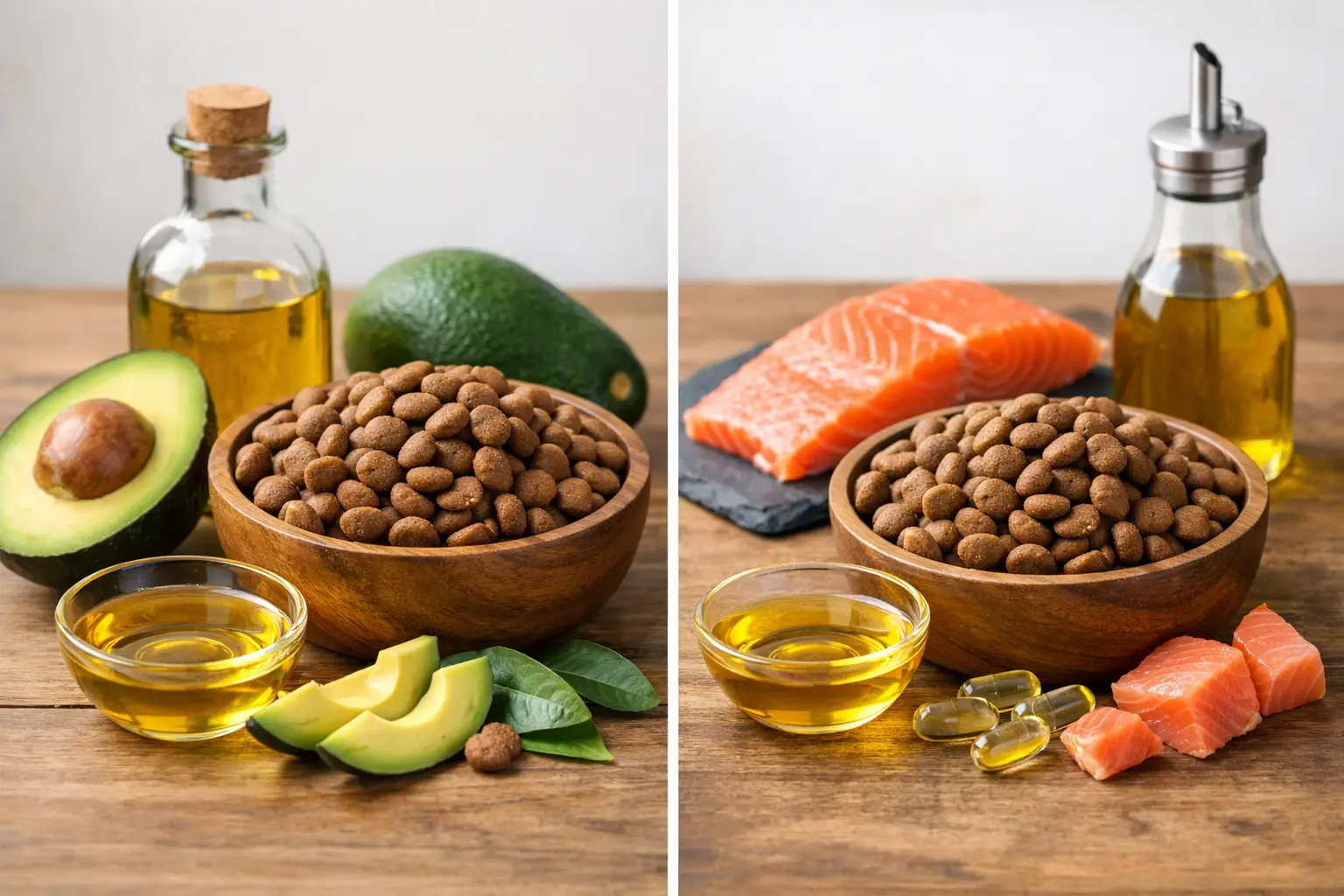
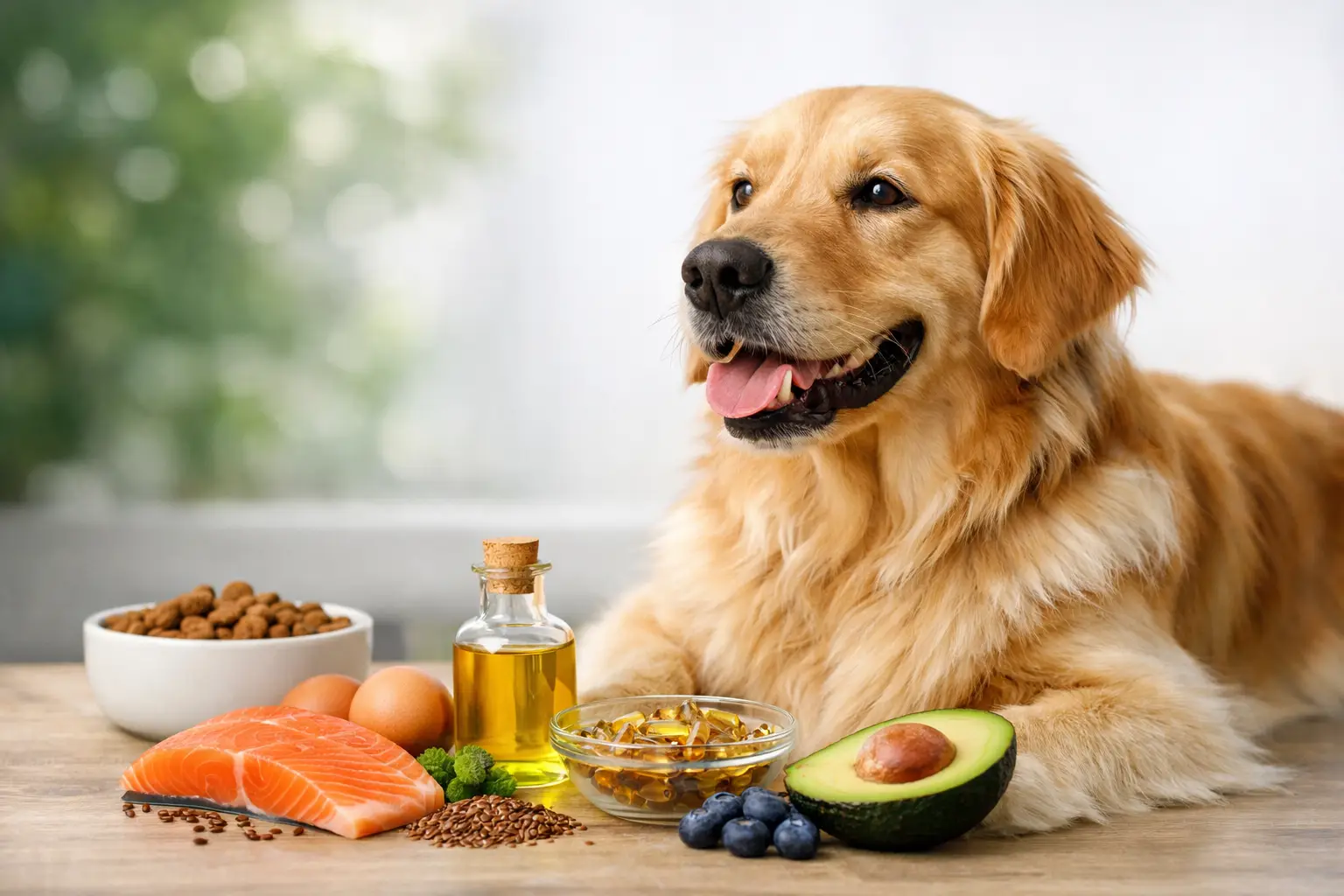
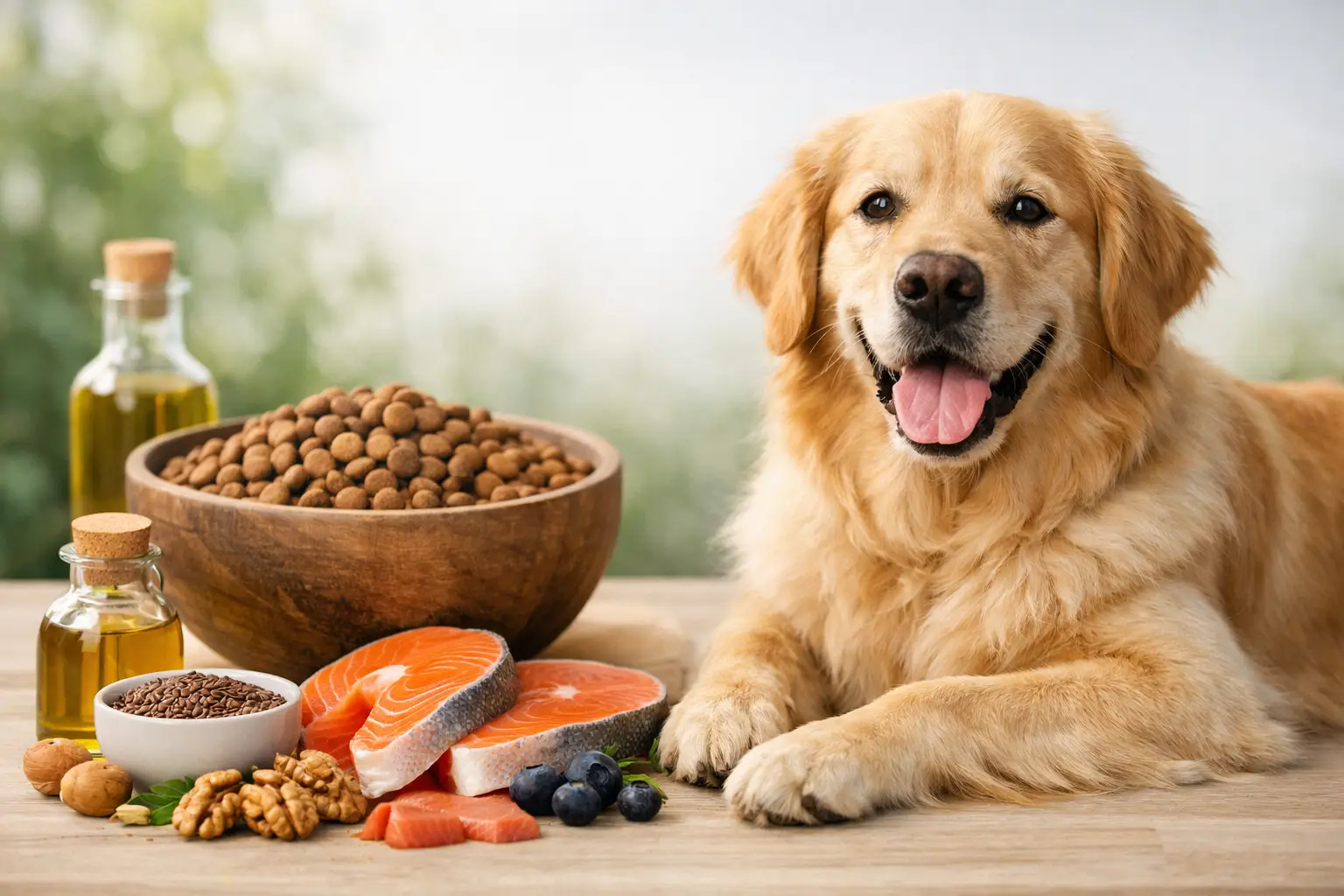
Fish oil and fish meal are familiar sources of EPA and DHA. Flaxseed and other plant ingredients can provide ALA. Poultry fats and some vegetable oils are typically rich in omega-6 fatty acids. Avocado and avocado oil also contribute beneficial fats and fit naturally into a wellness-focused approach to pet nutrition.
At AvoDerm, avocado is more than a memorable ingredient. It is part of a nutrition philosophy centered on good fats and visible wellness, including support for healthy skin and a beautiful coat. As with any ingredient, what matters is how it is used within a complete, balanced formula designed for dogs.
One important distinction: a carefully prepared dog food containing avocado ingredients is not the same as offering your dog avocado from the kitchen. Avoid feeding pits, peels, or large pieces of fresh avocado, which can create choking or digestive risks. If you have questions about a specific food or ingredient, your veterinarian can help you make the safest choice for your dog.
What to look for on the label
When comparing omega rich dog food, start with the nutritional adequacy statement. Look for a food identified as complete and balanced for your dog’s life stage, whether that is growth, adult maintenance, or all life stages. This confirms the recipe is intended to provide more than a single wellness benefit.
Then consider the ingredient story. Named protein sources, recognizable sources of healthy fats, and purposeful ingredients are good signs. A label may identify fish oil, flaxseed, avocado oil, or other fat sources, but the best choice still depends on your individual dog.
The guaranteed analysis can be useful, though it does not always tell the whole story. It lists minimum crude fat and may list omega-3 and omega-6 levels, but it will not always show the precise type, freshness, digestibility, or balance of every fatty acid. A high number alone does not automatically make a food better.
Look beyond the front-of-bag promise and ask practical questions. Is the food made for your dog’s age and size? Does it match a known sensitivity or ingredient preference? Is the brand clear about quality and manufacturing? Can you feed it consistently within your budget? A food only helps if it works for your dog and fits your routine.
Balance matters more than adding extra oil
It can be tempting to add fish oil or another supplement the moment your dog has dry skin. Supplements can have a place, but more is not always better. Extra fat adds calories, which can make weight management harder, and high amounts of certain oils may cause loose stool or digestive upset.
The relationship between omega-3 and omega-6 fats matters too. Dogs need both, and there is no one perfect ratio for every dog, every recipe, or every health concern. A veterinarian may recommend a more tailored approach for dogs with diagnosed skin disease, joint concerns, pancreatitis, obesity, or a history of digestive sensitivity.
If your dog eats a complete and balanced omega-rich diet, adding supplements without guidance may be unnecessary. Start with the foundation: a quality food, an appropriate portion, fresh water, regular grooming, and a consistent feeding routine.
How to switch foods comfortably
Even a great new recipe can be hard on a dog’s stomach if the transition happens too quickly. Give the digestive system time to adjust by gradually mixing the new food with the old food over seven to 10 days. Start with mostly old food and a small amount of the new recipe, then increase the new food every few days.
Dogs with especially sensitive digestion may need a slower transition. Watch stool quality, appetite, energy, and skin comfort as you make the change. Mild shifts can happen during a transition, but persistent vomiting, diarrhea, refusal to eat, or signs of discomfort are reasons to pause and speak with your veterinarian.
Portion size matters during a switch as well. Omega-rich foods may be calorie-dense, so use the feeding guide as a starting point and adjust for your dog’s age, activity level, body condition, and treat intake. A glossy coat is even better when it comes with a healthy weight and plenty of energy for the life your dog loves.
When food sensitivities are part of the picture
Dogs with suspected food sensitivities need a more careful plan. Itching, ear issues, or digestive upset can have many causes, and changing foods repeatedly can make it harder to identify patterns. Your veterinarian may recommend a structured diet trial using a limited-ingredient or specialized diet.
In that situation, do not add extra treats, table scraps, flavored medications, or oils unless your veterinarian says they are appropriate. Consistency makes the results more meaningful. Once you know which ingredients agree with your dog, you can choose nutrition that supports both comfort and coat health without guessing.
A nourishing bowl is one of the simplest ways to show up for your dog every day. Choose a complete recipe with purposeful omega fats, make changes patiently, and let steady care give that healthy, happy coat its chance to shine.