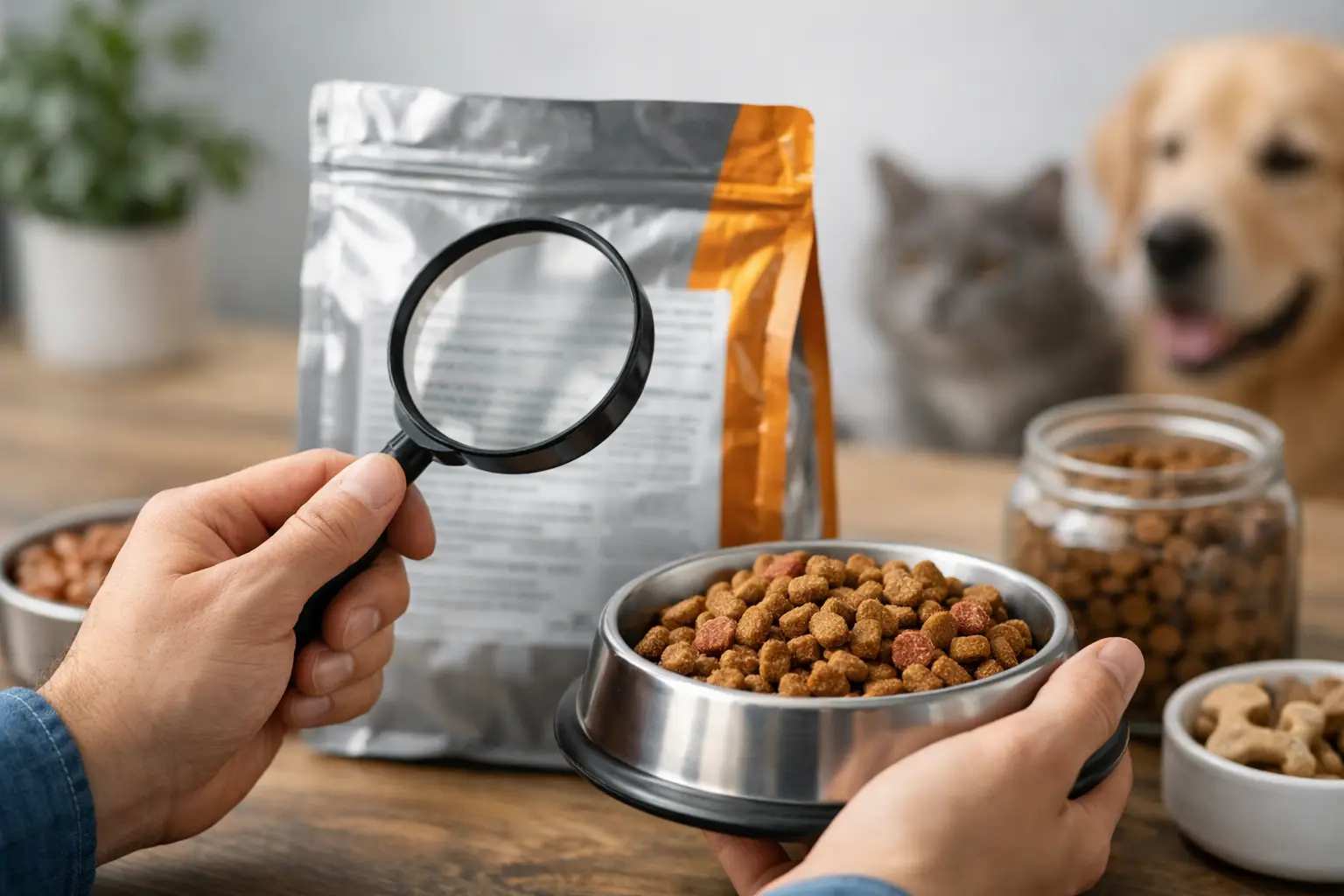
Standing in the pet food aisle with two bags that both promise shiny coats, healthy digestion, and complete nutrition can make any pet parent pause. If you have ever wondered how to read pet food labels without getting lost in marketing language, you are not alone. The good news is that once you know where to look, the label becomes a practical tool for choosing food that supports your dog or cat’s everyday health.
Why learning how to read pet food labels matters
The front of the bag is designed to catch your eye, but the side and back panels tell the real story. That is where you can see what is actually in the food, whether it is complete and balanced, and how the formula is intended to support your pet.
This matters because two foods can look similar at first glance and still be built very differently. One may focus on animal protein and targeted nutrients for skin and coat, while another may rely more heavily on fillers or broad claims that sound impressive but say very little. Reading labels well helps you compare foods on substance, not just packaging.
For pet parents who care about ingredient quality, food sensitivities, and visible wellness benefits, label reading is one of the easiest ways to shop smarter.
Start with the nutritional adequacy statement
If you only check one part of the label, make it this one. The nutritional adequacy statement tells you whether the food is complete and balanced for a specific life stage, such as growth, maintenance, or all life stages.
That phrase matters because treats, toppers, and supplemental foods can look like full meals if you only read the front panel. A complete and balanced food is formulated to provide the essential nutrients your dog or cat needs on a daily basis when fed as directed.
Life stage is just as important. A growing puppy or kitten has different nutritional needs than an adult pet, and senior pets may benefit from different calorie levels or nutrient profiles depending on their health and activity. A food can be high quality and still not be the right fit if it is designed for a different stage of life.
Read the ingredient list with context
Ingredient lists usually get the most attention, and for good reason. They show what goes into the formula in descending order by weight before cooking. That gives you useful clues, but it does not tell the whole story.
What the first few ingredients can tell you
The first several ingredients often give you the clearest picture of the formula. If you are shopping for a premium dog or cat food, look for recognizable protein sources and purposeful ingredients that support health benefits you care about.
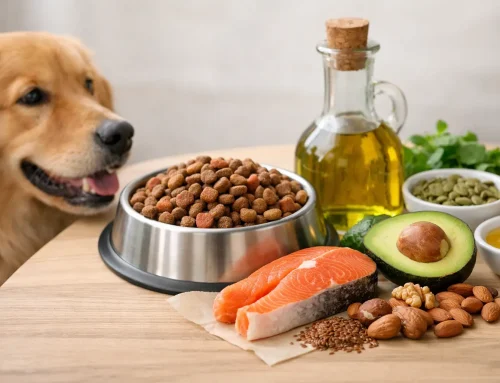
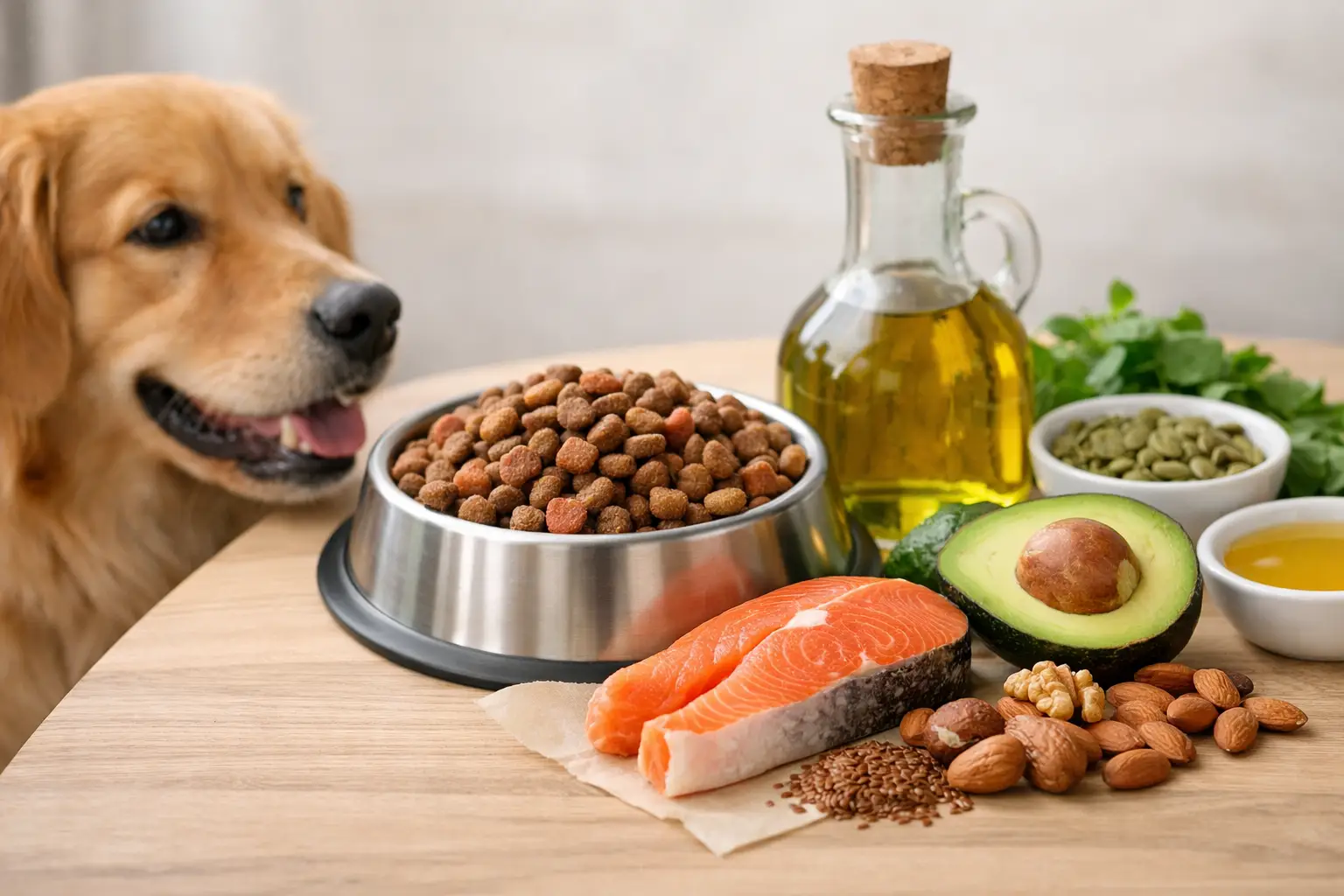
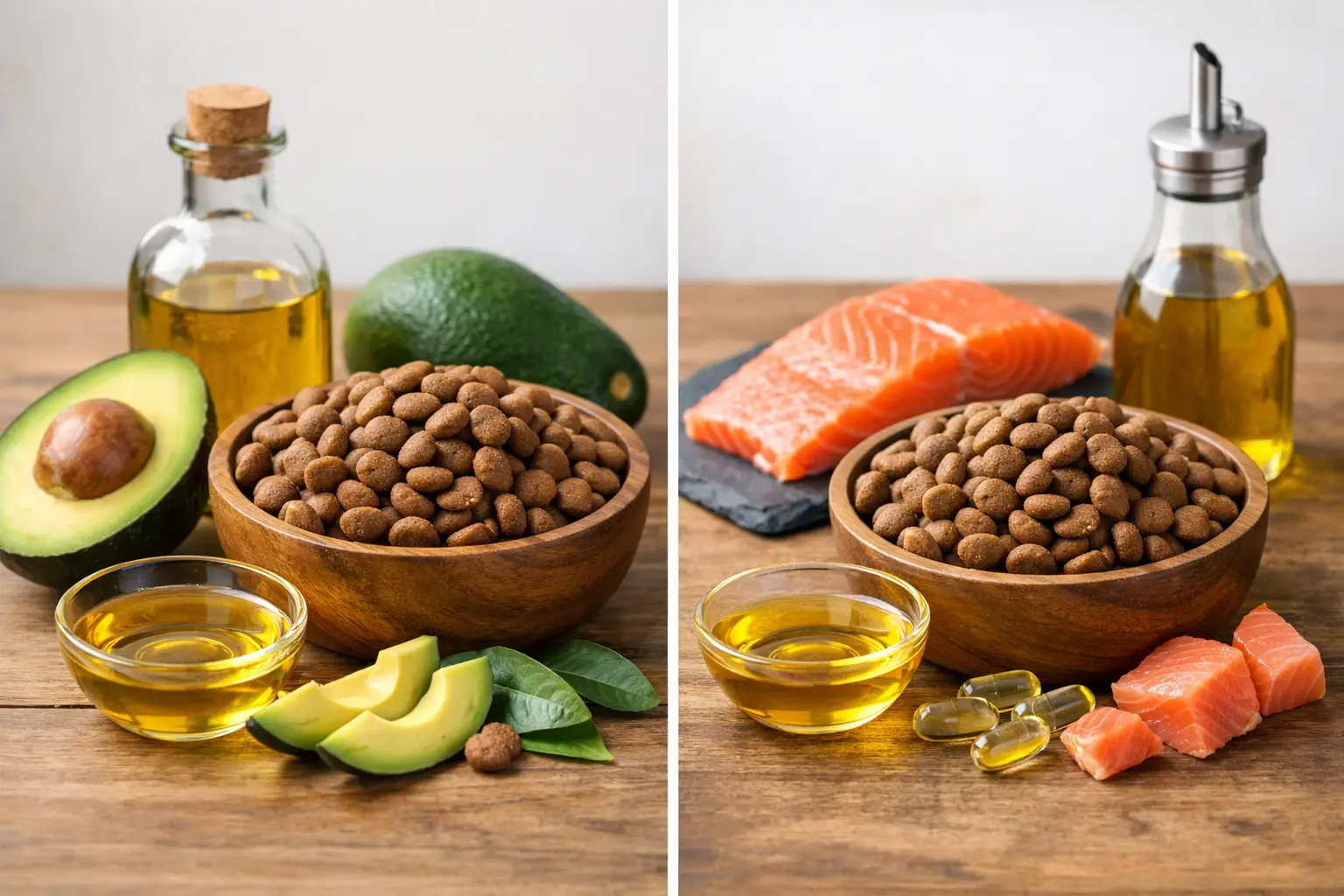
For example, pet parents concerned about skin and coat health may look for nutrient-rich ingredients that provide essential fatty acids. Ingredients like avocado or avocado oil can stand out here because they contribute naturally occurring omega fatty acids that support healthy skin and a beautiful coat. Good health shows, and ingredient function matters.
That said, do not oversimplify the list into a single rule like “the first ingredient must always be fresh meat.” Fresh ingredients contain water weight, so placement can be misleading if you do not consider the formula as a whole. A dry food with a balanced blend of high-quality protein meals, grains or grain-free carbohydrate sources, fats, vitamins, and minerals may still be an excellent choice.
Ingredient names matter more than vague language
Specific ingredients are usually more helpful than generic ones. “Chicken meal” or “salmon meal” tells you more than “meat meal.” “Brown rice” tells you more than “grain products.” Specific naming gives pet owners better visibility into what they are feeding and can be especially valuable when managing sensitivities.
If your pet has a history of digestive upset or suspected food sensitivities, this is where careful reading becomes even more useful. The fewer vague descriptions on the label, the easier it is to identify what works and what may be worth avoiding.
Know what the guaranteed analysis does and does not mean
The guaranteed analysis lists minimums for crude protein and crude fat, along with maximums for crude fiber and moisture. Some labels also include extras such as omega fatty acids, taurine, or other nutrients tied to specific health benefits.
This section helps you compare formulas, but only up to a point. It does not tell you ingredient quality, digestibility, or how nutritious the food is overall. It is more like a snapshot than a full nutritional story.
A higher protein percentage is not automatically better for every pet. A more moderate fat level may be ideal for one dog and less appropriate for another with higher energy needs. Cats also have different nutritional priorities than dogs, especially when it comes to protein and certain essential nutrients.
Moisture can make comparisons tricky, especially between dry and wet food. Wet food naturally contains much more water, so the percentages may look lower even when the nutrient contribution is strong. If you are comparing food types, you need to account for that rather than judging the numbers at face value.
Pay attention to feeding guidelines, but treat them as a starting point
Feeding guidelines are helpful, especially when you are trying a new food. They give you a baseline based on your pet’s weight and sometimes activity level. But they are not one-size-fits-all instructions.
Your dog’s age, metabolism, breed size, exercise level, and body condition all affect how much food is right. The same is true for cats, especially indoor cats with lower calorie needs. If your pet is gaining or losing weight, the label recommendation may need adjustment.
This is also where consistency matters. Measuring meals accurately makes it much easier to tell whether a food is truly working for your pet.
Be smart about marketing claims
Learning how to read pet food labels also means knowing the difference between regulated information and front-of-package claims. Words like “natural,” “premium,” or “healthy” can be meaningful, but they are not all equally precise.
“Natural” may reflect ingredient philosophy, but it does not automatically tell you whether the food is ideal for your pet’s needs. “Premium” is often more of a positioning term than a nutritional standard. Claims around skin, coat, digestion, or sensitivities are worth considering, but they should be supported by the ingredient list and nutrient profile.
If a bag promotes coat health, look for ingredients and nutrients that support that benefit, such as quality fats and omega-rich ingredients. If it highlights digestive support, check for thoughtful ingredient choices and a formula designed for easy digestion. The claim should connect to something visible on the label, not float on its own.
Look for transparency from the brand
A trustworthy label is specific, clear, and backed by a company that is willing to stand behind its food. While the package itself has limited space, transparency often shows up in how ingredients are named, whether the intended life stage is obvious, and whether the brand communicates clearly about sourcing and manufacturing.
For many pet owners, that level of transparency is part of what makes a premium food feel dependable. A thoughtful formula is important, but so is confidence in how the food is made.
How to compare pet foods without overthinking it
When you are deciding between foods, start with three questions. Is it complete and balanced for your pet’s life stage? Does the ingredient list reflect the kind of nutrition and functional benefits you want? And does the guaranteed analysis align with your pet’s general needs?
From there, think about your individual animal. A dog with dry skin may benefit from a formula with ingredients that support skin and coat health. A cat with a sensitive stomach may do better with a simpler recipe and a careful transition. It depends on the pet, not just the trend.
That is why the best label readers are not looking for perfection. They are looking for fit.
A simple mindset for how to read pet food labels
The most helpful way to approach a label is with curiosity, not suspicion. You do not need to decode every vitamin name or memorize every ingredient category. You just need to know which parts carry the most weight and how they connect to your pet’s real-world wellness.
When a food supports healthy digestion, steady energy, and a soft, beautiful coat, those results usually begin with smart formulation choices. Brands that focus on purposeful ingredients, like AvoDerm, build around that idea from the start.
The next time you turn over a bag or can, give yourself an extra minute. The label is not there to impress you. It is there to help you feed with confidence, and your pet benefits from every informed choice you make.